Why Your Maid’s Ride Matters More Than You Think
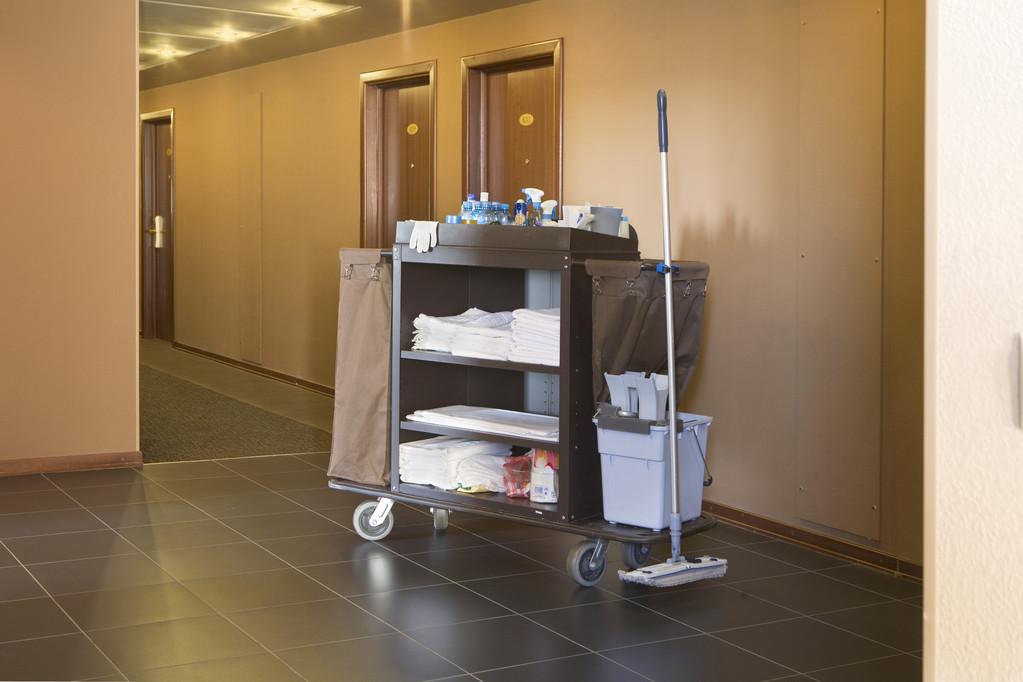
Picture this: a housekeeper pushes a wobbly, squeaky cart down a plush hotel corridor. It tips slightly, a spray bottle clatters onto a guest’s suede pumps, and 30 extra minutes are lost re-cleaning the mess. One small cart, one giant dent in efficiency, guest satisfaction, and your TripAdvisor score. The truth is, the humble cleaning cart is the pit crew of every hotel room turnover—ignore its design and you’re essentially asking Lewis Hamilton to win on flat tires. In this guide we’ll break down the top features to look for in a hotel cleaning cart so you can turn housekeeping into a well-oiled, silent, stain-busting machine.
I. Essential Functionality & Compartmentalization
A cart without a logical layout is like a kitchen where the forks live in the oven—technically functional, but nobody wants to cook there. Start by mapping the typical workflow: chemicals → tools → fresh linens → soiled linens → trash. Each category deserves its own “neighborhood.”
Must-have real estate:
- Lockable chemical caddy: Prevents toddler guests (or adventurous influencers) from grabbing the purple stuff.
- Ventilated, zippered bag for dirty laundry: Keeps the eau de gym socks from hugging the clean towels.
- Rigid trash chamber with a quick-swap liner: Because no one has time for a 3-minute origami session with a 50-gallon bag.
- Adjustable dividers: One week you’re storing economy-size shampoo, the next you’re hoarding king-size duvets—your cart should shrug and adapt.
Pro tip: color-code the compartments. A glance should tell staff “blue = clean, red = biohazard, green = guest amenities.” It’s elementary, Watson—elementary enough that a bleary-eyed 6 a.m. crew can nail it.
II. Ergonomics & Maneuverability
OSHA estimates that housekeeping staff suffer one of the highest rates of work-related musculoskeletal disorders. Translation: if your cart fights back, your workers’ comp bill grows. Look for:
- Handle height: Adjustable 38–42 inches fits most statures; angled 10–15° keeps wrists neutral (think shaking hands, not karate chopping).
- Grip material: Closed-cell foam or thermoplastic rubber—soft when it’s 6 a.m. and 45 °F in the corridor.
- Wheels: 5-inch non-marking polyurethane is the sweet spot: soft enough to hush the ride, hard enough not to flatten under 200 lb of linens. Pair two fixed casters in the back with two locking swivel casters up front for grocery-cart agility minus the wobble.
- Turning radius: Under 55 inches clears most elevator doors; otherwise you’re playing Tetris with a full cart and a yawning guest.
Balance matters: heavy items (trash, water-filled vacs) ride low, light items (amenity boxes) ride high. A low center of gravity is the difference between a cart and a catapult.
III. Durability & Build Quality
Buying a cart is a bit like adopting a turtle: pick a good one and it’ll outlast half your management team. The frame is where pennies turn into pounds saved.
- Stainless steel 304: Rust-proof even when your chlorine tab decides to leak. Ideal for humid climates or beach resorts.
- Powder-coated steel: Costs ~20% less, still laughs at most chemical splashes—just touch-up nicks with clear nail polish (yes, really).
- Heavy-duty ABS or HDPE plastic: Won’t dent walls, weighs 30% less, and is MRI-quiet—perfect for historic properties where every echo is a Yelp star at risk.
Inspect welds: look for fish-scale patterns, not porous “Swiss cheese.” Axles should ride on sealed ball bearings—if you see plain steel pins, swipe left.
IV. Safety Features
Nothing kills the vibe like a guest slipping on a rogue bottle of glass cleaner. Safety is insurance you can push.
- Spill containment tray: A 2-liter reservoir under chemical shelves buys you 30 seconds to react before blue goo hits the Persian runner.
- Anti-tip design: Base should be 20% wider than the top; some carts add 10-lb counterweights—think bowling ball in a tuxedo.
- Bumper guards: Wrap corners in molded rubber; your drywall (and the honeymooners’ luggage) will thank you.
- Reflective tape or hi-vis trim: Because a cart parked outside a ballroom at 1 a.m. is basically ninja-level invisible.
Brakes on at least two wheels are non-negotiable on sloped porte-cochères; look for foot-pedal locks that release with a backward tap—no bending, no problem.
V. Efficiency & Smart Design Details
Speed is money: the average U.S. hotel spends roughly 50% of room revenue on labor. Shave one minute per room and a 200-room property saves 1,200 labor hours a year—enough to fund the holiday party (or at least the avocado toast station).
- Tool hooks at shoulder height: Mops click in like a seatbelt—no bending, no dripping.
- Magnetic strip for scissors & keys: Because fishing in a canvas pocket is so 1999.
- Smooth, crevice-free shelves: A quick squeegee pass and you’re done; germs hate open spaces.
- Quick-change bag system: Think diaper-genie—pull full bag, slap new one, snap ring shut. Ten seconds flat.
Keep your most-used items (coffee packets, shower caps) in see-through cubbies; staff spot inventory gaps without playing suitcase Jenga.
VI. Additional Features & Customization Options
Once the basics are bullet-proof, sprinkle on the fairy dust:
- Fold-down linen shelf: Doubles as impromptu valet station during turndown.
- Add-on caddies: Clip-on UV-light box for phone sanitizers or a tiny shredder for confidential guest notes (looking at you, celebrity floor).
- Brand colors & logo plates: A cart in Pantone 293C rolling past the elevator bank is free advertising—cheaper than a Times Square billboard.
- Compact “city” models: 18-inch width navigates historic European lifts; when folded, it tucks into a broom closet built for, well, brooms.
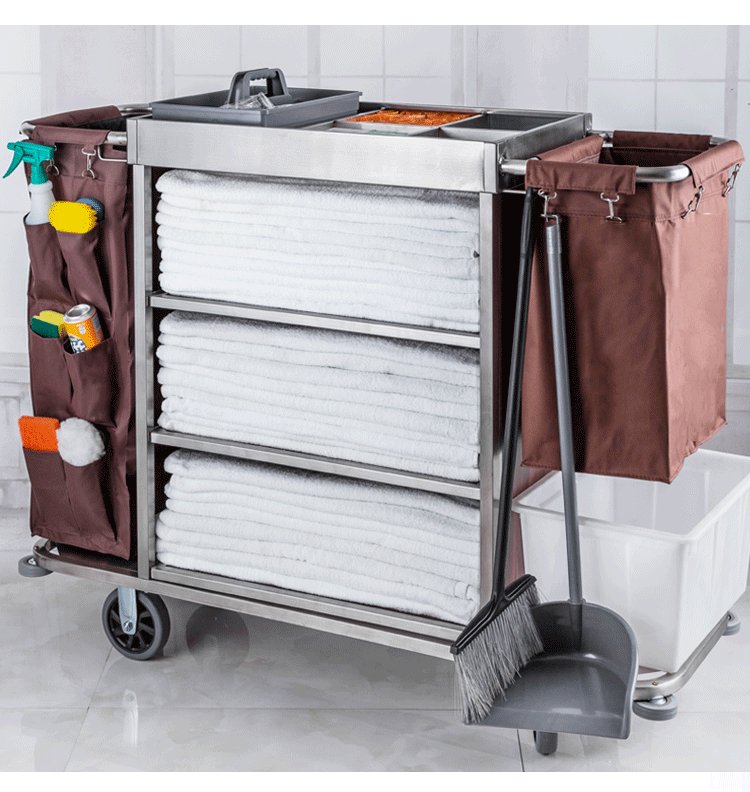
Need inspiration? Keep your housekeeping operations running smoothly with the Aukron AB01 Multifunctional Hotel Cart. Designed specifically for daily linen transport, cleaning supplies, and hotel room servicing, this cart is both sturdy and highly functional. With a compact yet spacious build, four supportive steel tubes, and smooth-rolling wheels, it helps your staff work more efficiently while keeping everything neatly organized. Key perks include a multipurpose design perfect for linens, towels, toiletries, and trash; a sturdy 4-tube frame for enhanced stability; and 5-inch black wheels that glide quietly across both tile and that impossible 1970s shag carpet you still haven’t replaced.
VII. Compliance, Brand Reputation & Service
Even a Ferrari needs a pit crew. Vet manufacturers the way you’d vet a sous-chef:
- Warranty: Minimum five years on frame, one year on wheels. Anything less screams “we don’t trust our welds.”
- Parts availability: Can you buy a single replacement caster at 2 a.m. on a Sunday? If not, keep scrolling.
- Certifications: Look for CE mark (EU) or NSF (food-contact safe) if your cart doubles for minibar restocks—auditors love shiny stickers.
- Customer support: A 24-hour callback guarantee beats a fancy brochure every time.
Finally, align with OSHA’s Hazard Communication Standard: carts that segregate chemicals and provide lockable storage tick the inspector’s box before they even open their clipboard.
Conclusion: Your Cart, Your Competitive Edge
Choosing a hotel cleaning cart isn’t a supply-clerk afterthought—it’s a strategic move that boosts efficiency, safeguards staff, and silently woos guests who will never notice the absence of chemical smells or hallway clanks. Prioritize functionality first, ergonomics second, durability third. Layer on safety, speed tweaks, and a dash of branding, and you’ve got a silent partner that pays for itself faster than you can say “late checkout.” Roll wisely, and may your corridors be quiet, your linens pristine, and your online reviews five-star flawless.
FAQ
Q: How many rooms should one cleaning cart typically service?
A: Between 12–18 rooms per eight-hour shift, depending on room size and stay-over vs. checkout ratio. Overflow? Add a satellite cart or risk the dreaded 6 p.m. “room not ready” complaint.
Q: What is the average lifespan of a quality hotel cleaning cart?
A: Expect 7–10 years for stainless or powder-coated steel frames with proper maintenance; plastic carts average 5–7 years before UV fade makes them look sad and patchy.
Q: Are stainless steel carts always better than plastic ones?
A: Not always. Stainless wins on longevity and chemical resistance, but high-grade plastic is lighter, quieter, and kinder to historic moldings. Match the cart to your property’s personality—and your elevator’s weight limit.
Q: How important is it to have brakes on all wheels?
A: Critical on slopes or valet ramps. At minimum, use two locking casters; four is luxury cruise control. Remember: gravity never takes a day off.
Q: Can I customize a cart after purchase?
A: Absolutely—most manufacturers sell bolt-on shelves, bag holders, and logo panels. Just ensure add-ons don’t void the frame warranty; read the fine print like it’s a ransom note.
References & Further Reading
- OSHA Ergonomics Guidelines for Housekeeping
- American Hotel & Lodging Association Best Practices
- Mayo Clinic – Benefits of Daily Movement for Hospitality Workers
- Commercial Cleaning Magazine – “The Hidden Cost of Housekeeping Injuries,” June 2023 issue
- Institute of Inspection Cleaning and Restoration Certification (IICRC) – Hotel Cleaning Standard S100