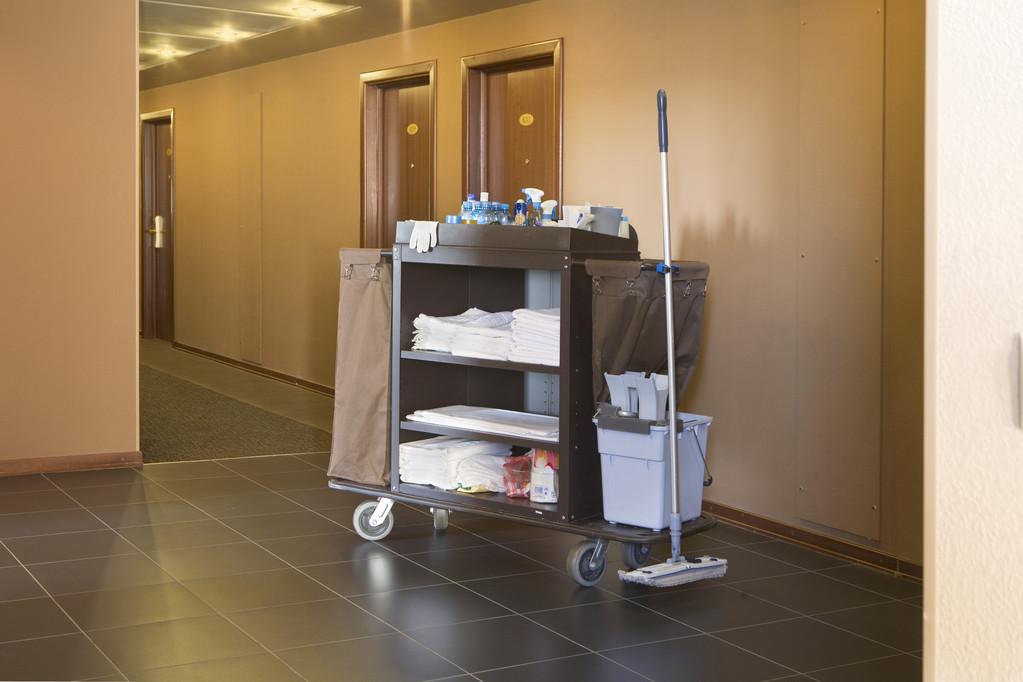
Picture this: it’s 10:07 a.m., checkout rush is in full swing, and your housekeeper is wrestling a wobbly, undersized cart down a carpeted corridor. The trash bag slips, the chemical bottle topples, and—crash—a guest steps out to see a bottle of lemon-scented disinfectant rolling toward their Louboutins. One scathing Tweet later, your online rating dips faster than the elevator to the lobby. A dramatic scene? Maybe. But it underscores a simple truth: the best hotel cleaning carts for housekeeping staff aren’t just rolling shelves; they’re silent partners in brand protection, staff sanity, and operational speed. This guide is here to make sure your next cart purchase is the hospitality equivalent of swapping a horse-drawn buggy for a Tesla—quiet, efficient, and maybe even a little fun to drive.
1. Core Features and Performance Evaluation
Think of a cleaning cart like a Swiss-Army backpack on wheels. If the blade is dull, the screwdriver bent, or the handle too short, you’ll curse it every time you pack for a hike. Here’s how to inspect every “blade” before you buy.
1.1 Capacity and Dimensions: Right-Sizing for Your Property
A 400-room airport Hilton has different hauling needs than a 45-room countryside inn. Measure your average square footage per room, count the linens you cycle daily, and—crucially—measure doorway widths and elevator thresholds. A cart that’s 20 in (51 cm) wide will scrape elevator jambs in older European lifts; 18 in (46 cm) is the sweet spot for most legacy buildings. Pro tip: if your property still uses winged room doors, add two inches to your width buffer—those ornate handles bite.
1.2 Compartmentalization and Layout: A Place for Everything
Ever tried finding your car keys in a tote filled with loose granola bars? A cart without compartments is the same daily frustration. Look for:
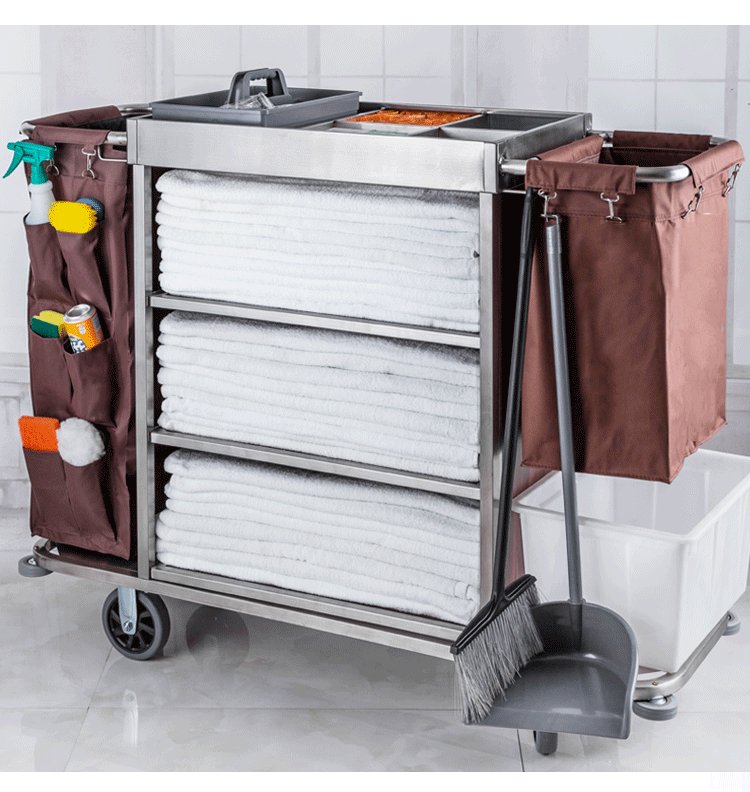
- Triple-bag laundry rings (soiled, stained, guest clothing) to avoid cross-contamination.
- Lockable chemical cubby—OSHA and EU REACH regulations both frown on bleach riding shotgun with towels.
- Removable amenity drawer sized for 0.33 oz (10 ml) lotion bottles; it beats fishing around for that last lavender packet.
1.3 Mobility and Maneuverability: Wheels That Glide, Not Grind
According to the U.S. Bureau of Labor Statistics, housekeeping ranks in the top 10 occupations for musculoskeletal injury. Silent, non-marking thermoplastic rubber casters—at least 4 in (10 cm) diameter—absorb corridor vibration and save wrists. Look for four swivel casters with two lockable, so the cart stays put on sloped parking-garage ramps while loading.
1.4 Material and Durability: Plastic Fantastic or Steel Strong?
High-density polyethylene (HDPE) bodies resist bleach, acids, and the occasional rogue nail file. Aircraft-grade aluminum frames shave 8–10 lb (3.5–4.5 kg) off total weight, a perk if your team shuttles carts between floors via stairwell during power outages. For ultra-tough environments—think beach resorts where salt and sand rule—powder-coated steel adds decades of life but may trade heft for longevity.
1.5 Special Features and Accessories: The Cherry on Top
Fold-out hanging rods prevent the “bedsheet spaghetti” look. Magnetic strip for lost-and-found rings and earrings? Guests rave when you return jewelry within the hour. And a USB charging port (yes, that’s now a thing) lets staff power radios or phones on marathon days—because nothing kills productivity like a dead team chat.
2. Staff Experience and Ergonomic Design
Happy housekeepers equal happy guests. A study in the International Journal of Hospitality Management linked ergonomic tools to 17% faster room-turn times. Translation: better ergonomics = more rooms per shift = overtime savings.
2.1 Operational Convenience: Intuitive Workflow
Top-loading linen bags reduce torso twisting by 28% compared with side-access models, according to occupational health data used by the CDC. Place the amenity shelf at mid-torso height (about 38 in / 96 cm) so shorter staff aren’t tip-toeing and taller staff aren’t crouching.
2.2 Comfort and Safety: No More Shin Splits
Rounded bumper edges save ankles, while toe-guard wheel plates stop the cart from rolling over dropped earbuds (and the ensuing liability claim). Foam-coated handles cut vibration and feel warmer in frosty winter garages—small detail, big morale booster.
2.3 Productivity Enhancement: Fewer Trips, More Tips
A cart that carries 40 sets of towels instead of 25 can trim one round trip per room. Over 18 rooms that’s 2.4 mi (3.8 km) saved—roughly the calorie burn of a grande latte, as calculated by the Compendium of Physical Activities. Your staff can spend that reclaimed energy on thoughtful turndown touches that earn glowing reviews.
2.4 Ease of Cleaning and Maintenance: Wipe-and-Go
Smooth, crevice-free panels let staff sanitize carts in under 90 seconds—crucial when the same cart cleans a flu-quarantine suite and a VIP suite in quick succession. Removable bins you can chuck into a commercial dishwasher? Even better.
3. Top Brands, Models, and Comparisons
3.1 Brand Landscape: The Household Names
Rubbermaid Commercial—the Coca-Cola of carts—offers modular add-ons but sits at a premium price. Unger excels in lightweight aluminum frames popular across Scandinavia where elevators are tiny. Carlisle wins on color variety (helpful for color-coded infection control), while Impact Products dominates budget brackets across mid-scale U.S. motels.
3.2 Model Recommendations by Hotel Tier
Economy: Impact Maids Cart—basic HDPE, 18 lb, $199-ish. No frills, but it survives three-year depreciation cycles.
Mid-Scale: Rubbermaid Housekeeping Cart 6173—lockable doors, 4-bag laundry, quiet casters. Mid-$400s; ROI visible in under six months via faster turns.
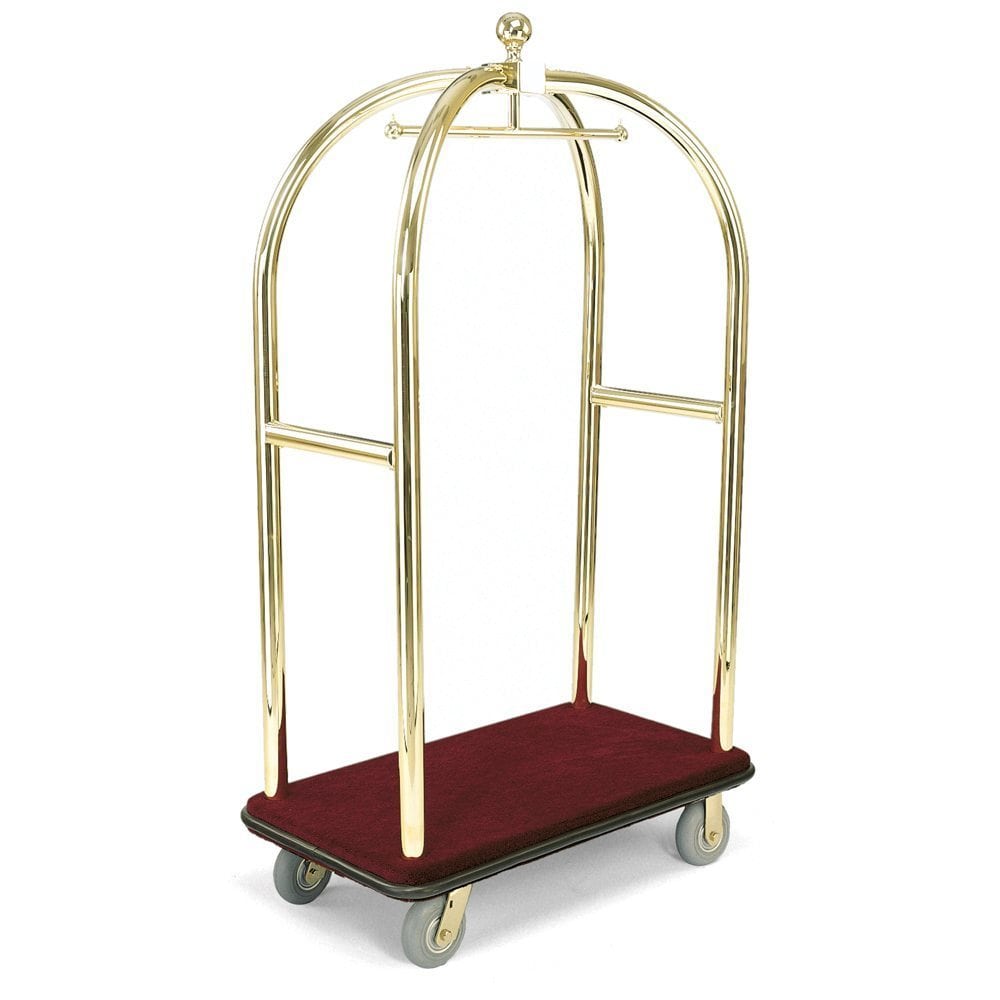
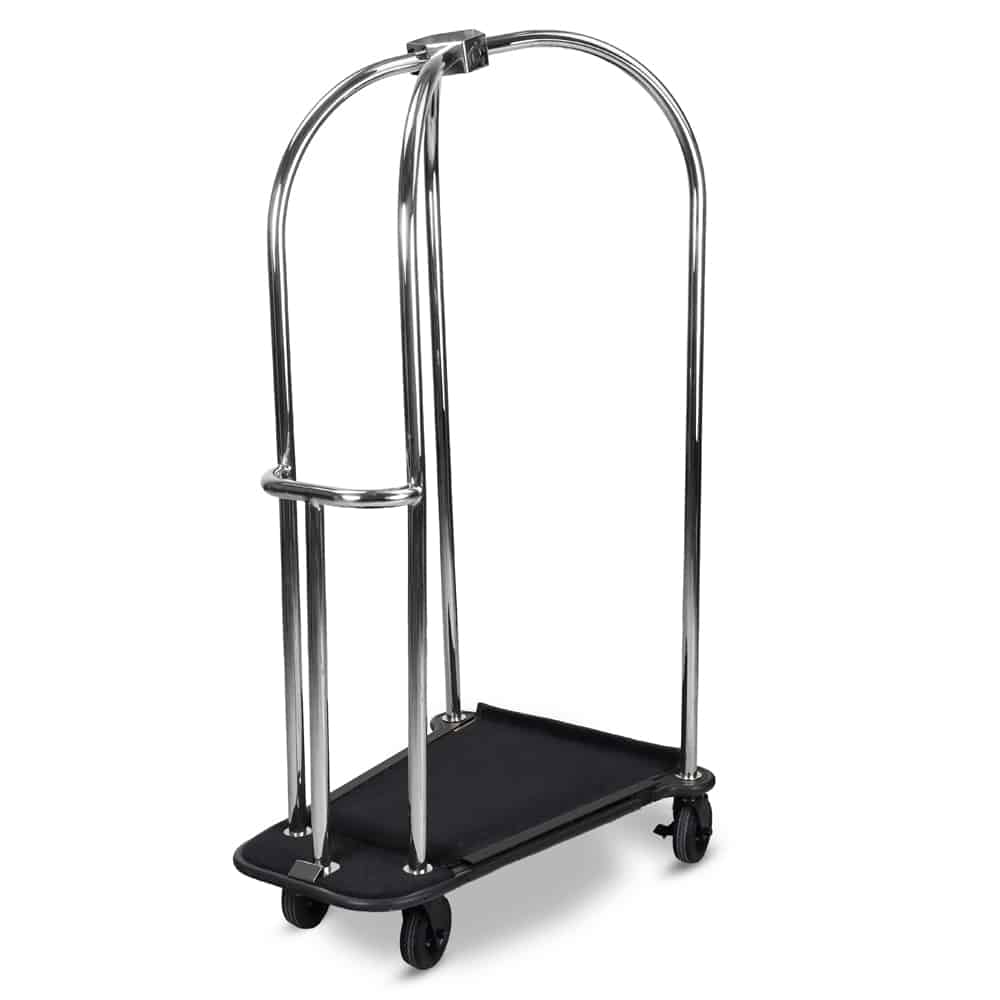
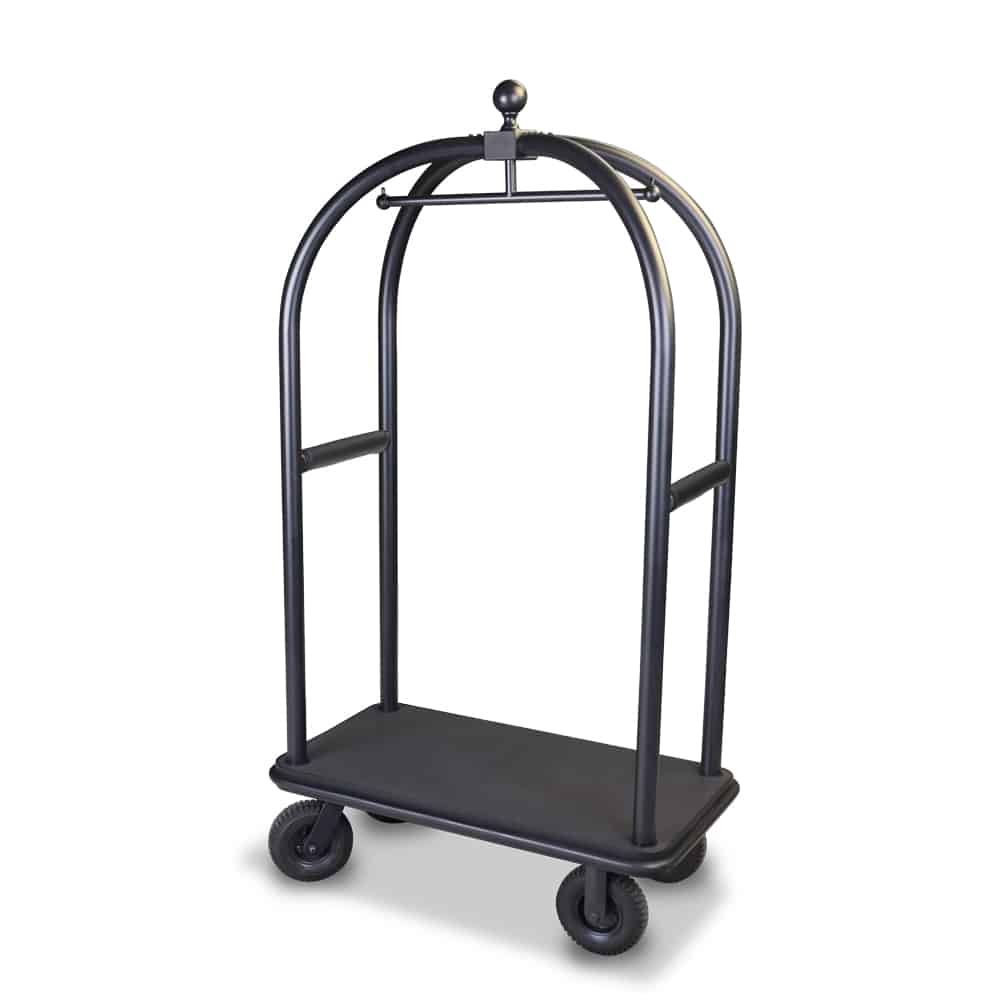
Luxury: Meet the Aukron AB02 Heavy-Duty Brown Conical Linen & Cleaning Cart. An 8-tube conical steel frame supports a cavernous 3.5 ft³ (100 L) linen bag—enough for king duvets without cramming. The brown powder-coated finish hides scuffs better than standard black, and the reinforced base shrugs off 300 lb (136 kg) loads. It’s the cart you roll out when Michelin-starred guests are watching.
3.3 Comparative Analysis: Pros & Cons Cheat Sheet
| Model | Weight | Load | Best For | Pain Point |
|---|---|---|---|---|
| Rubbermaid 6173 | 42 lb | 250 lb | Most U.S. corridors | Pricey add-ons |
| Unger CC600 | 28 lb | 220 lb | Narrow EU lifts | Smaller bag volume |
| Aukron AB02 | 55 lb | 300 lb | Luxury, resorts | Heavier when empty |
3.4 Value for Money: Do the Math
Take the Aukron AB02 at ~$650. Over a 7-year lifespan that’s $0.25 per room-night in a 200-room hotel running 70% occupancy. One avoided injury payout (average $11,000 in the U.S.) pays for 17 carts. Suddenly “expensive” looks like a bargain.
4. Purchasing Considerations and Hotel-Specific Fit
4.1 Budgeting and Total Cost of Ownership
Factor casters ($18 each), replacement bags ($45), and labor time to assemble (30 min at $20/hr). A $199 cart needing four new wheel sets in five years costs more than a $450 cart with lifetime caster warranty.
4.2 Matching Cart to Property Type
Boutique B&Bs: slimline 16-inch carts that fit into vintage lifts.
Conference hotels: models with built-in document holders for “Do Not Disturb” door signs.
Ski lodges: carts with salt-resistant frames and ski-boot-friendly wheel guards.
4.3 Supplier Selection and After-Sales Support
Buy from vendors enrolled in AHLA’s preferred supplier list; they understand ADA and OSHA nuances. Ask for a 3-year warranty on the frame and 1-year on wheels—anything less is a red flag.
4.4 User Reviews and Industry Reputation
Scour Hotel Management Network forums and Housekeeping Today Facebook groups. Posts praising quick-release bag systems or cursing squeaky casters at 6 a.m. are gold mines of unfiltered truth.
5. Frequently Asked Questions (FAQ)
Q: What is the average lifespan of a quality hotel cleaning cart?
A: 5–7 years for metal-framed models with replaceable parts; 3–4 years for light-duty plastic.
Q: How many cleaning carts does my hotel need?
A: One cart per 12–15 rooms is typical. Add 10% buffer for resorts with sprawling footprints.
Q: Are plastic or metal cleaning carts better?
A: Plastic resists chemicals and weighs less; metal handles heavier loads and lasts longer. Match material to abuse level.
Q: What are the most important features for staff comfort?
A: Adjustable handle height, shock-absorbing casters, and push-friendly weight distribution (60% over rear wheels).
Q: How can I improve organization of existing carts?
A: Add color-coded microfiber pouches, Velcro strips for tools, and magnetic trays for hairpins and screws.
Q: Where can I buy replacement parts like wheels or bins?
A: Most manufacturers sell on Amazon Business, but for bulk discounts contact WebstaurantStore or a local janitorial distributor.
6. Resources and Further Reading
- American Hotel & Lodging Association (AHLA) – safety standards and procurement guides.
- CleanLink – product reviews and trend articles.
- Hotel Management Network – case studies on ergonomic upgrades.
- Free download: “Cleaning Cart Evaluation Checklist” from CleanSourcing.net – covers caster test, load tilt, and noise meter readings.
Conclusion
The best hotel cleaning carts for housekeeping staff aren’t the flashiest—they’re the ones that disappear into the workflow, silently boosting speed, safety, and smiles. Prioritize ergonomics, durability, and the quirks of your property (tiny lifts, salty air, budget realities). Whether you opt for the bulletproof reliability of the Aukron AB02 or the modular charm of a Rubbermaid classic, loop your housekeepers into the trial, count the replaced casters, and run the long-term math. Then watch guest satisfaction—and your TripAdvisor rank—roll smoothly ahead, no rogue disinfectant bottles in sight.