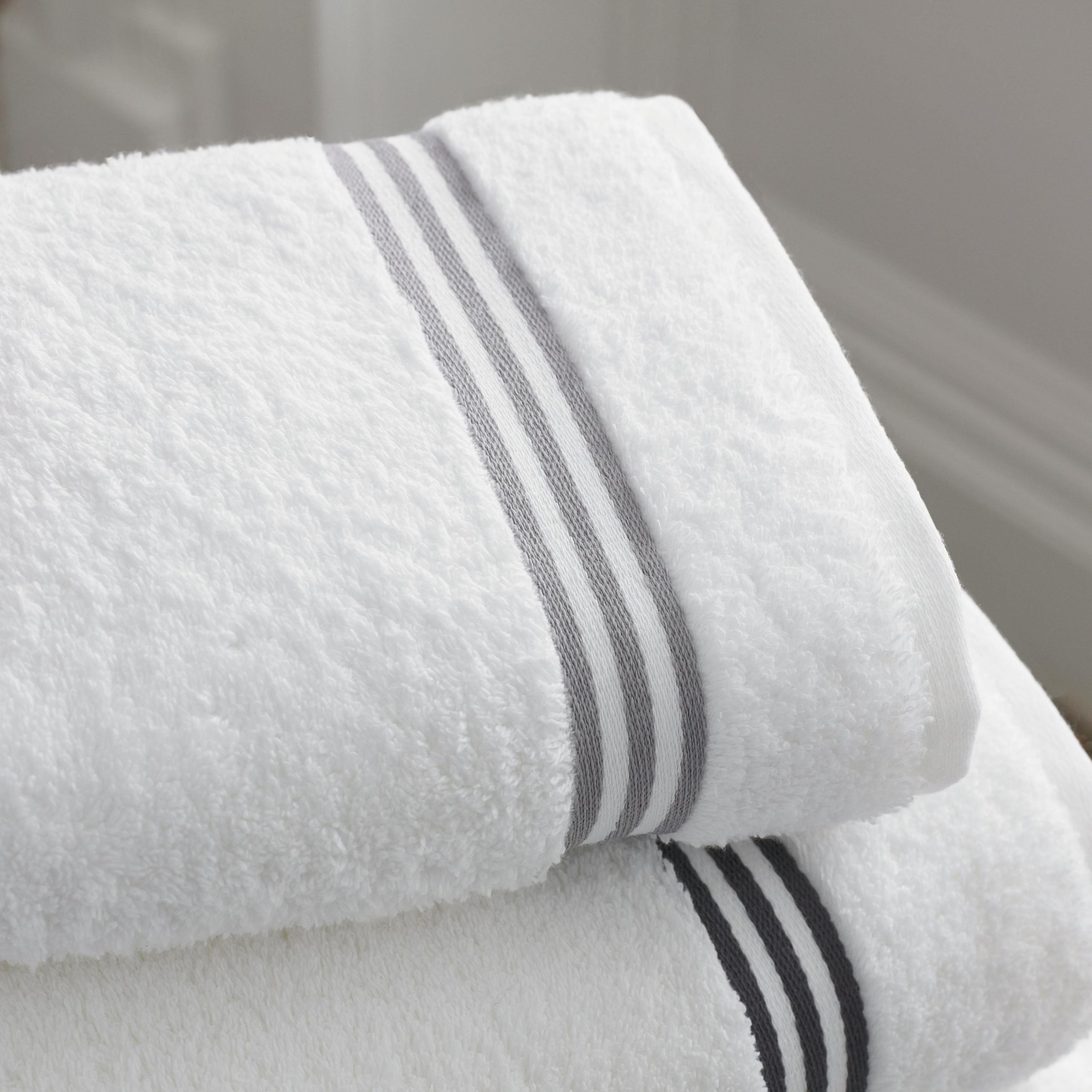
Picture this: you step out of a hotel shower, grab a towel the size of a small country, and bury your face in fabric so white it practically glows. Fast-forward two weeks. Back home, your own towels look like they’ve been through a sepia filter—dingy, gray, and about as inspiring as a Monday morning. What gives? Hotels aren’t laundering with unicorn tears; they’re running a tightly choreographed science experiment every day. In the next ten minutes you’ll learn exactly how that experiment works—and which parts you can steal for your own laundry room without turning the basement into a haz-mat zone.
Why Hotel Towels Stay So White (Understanding the Core Challenge)
Towels turn dull for the same reason white sneakers turn sad: they collect everything we slough off or slather on. Body oils, cocoa-butter moisturizers, SPF 50, a dab of last night’s foundation, hard-water minerals, detergent residue, and the occasional hitch-hiking mold spore all settle into cotton fibers like uninvited houseguests. Multiply that by 300 rooms changing linens daily and you’ve got a high-stakes game of “keep the whites white” played on an industrial scale. The goal isn’t just cleanliness—it’s consistency. A guest on the 27th floor expects her towel to match the one her colleague saw in the executive suite three weeks ago. That means every wash has to hit the same color benchmark, or the Twitter reviews start flying.
The Hotel Laundry Process: A Step-by-Step Breakdown
First, housekeepers toss used towels into color-coded hampers right at the cart—no rogue socks or jeans tagging along. At the laundry plant, linens are weighed (over-loading is the cardinal sin), then fed into washers that look like front-loading Volkswagens. These machines inject water to the exact liter, heat it to within half a degree, and spin at 400–600 G-force—enough to wring out a beach towel until it feels like damp cardboard. Chemicals are auto-dispensed by computer pumps; there’s no “glug, glug, looks about right” here. After the wash, an extractor (basically a centrifuge on steroids) flings out another 30 % of moisture, slashing drying time and gas bills. Finally, towels hit 180 °F dryers until moisture drops to 3 %—the sweet spot where fibers puff open for maximum fluff without baking to a crisp.
Key Chemicals & Products: The Professional Arsenal
Think of hotel chemistry as a four-piece band, each instrument tuned for a specific job. Industrial detergents contain surfactants that laugh in the face of hard-water calcium. Chlorine bleach zaps mildew and coffee drips, but it’s used sparingly—too many encores and cotton becomes fishing-line. Hydrogen-peroxide bleach (a.k.a. oxygen bleach) is the gentler indie singer: slower, cooler, kinder to elastic and colored piping. Alkaline builders like soda ash crank the wash pH to 10–11, turning grease into water-soluble soap. Finally, a “sour” (mild acid) drops the pH back to skin-friendly 6.5 so the towel doesn’t feel like you’re rubbing your face with a Tums. Fabric softener? Mostly black-listed; it coats fibers and kills absorbency faster than a rainstorm on a silk pillowcase.
Water Quality & Temperature: The Critical Foundation
Hard water is the silent whiteness thief. Calcium and magnesium sneak into fibers and leave a gray film no amount of Instagram filtering can fix. Hotels either pre-soften water with industrial ion-exchange tanks or add sequestering agents that handcuff the minerals mid-wash. Temperature is the other non-negotiable: 160 °F is the CDC-approved kill zone for bacteria and viruses, plus it melts body oils like butter in a cast-iron pan. Modern tunnel washers even recover heat from drained water to warm the next batch—because sustainability is sexier than ever.
Rinsing, Extraction & Drying: Finishing Strong
Ever tasted dish soap in your coffee mug? That’s what residual alkali feels like on a towel. Hotels run two to three rinse cycles until the outgoing water hits pH neutral. High-speed extraction shortens dryer time, saving energy and sparing fibers from the enemy of longevity: prolonged heat. Dryers are programmed to stop the instant moisture hits 3 %; any longer and cotton starts to “glass,” turning shiny and brittle like an old T-shirt you also use to wax the car.
Maintaining Towel Quality & Longevity
White towels are a business asset; replacing them every month would blow the minibar budget. Laundry managers track “wash cycles to failure” the same way airlines log engine hours. Bleach is dosed by the parts per million, not the “oops, spilled the jug” method. Monthly tensile-strength tests flag towels that are about to shred in a guest’s hands—because nothing says one-star review like emerging from the shower wearing more fuzz than you started with.
Commercial Laundry vs. Home Laundry: Key Differences
Your washer holds 15 lbs; a hotel tunnel washer swallows 250 lbs and completes a cycle in under 30 minutes. Home heaters top out around 130 °F thanks to safety standards; commercial boilers laugh at 180 °F. Your machine’s spin cycle hits 100 Gs; theirs quadruples that. And while you eyeball a capful of detergent, hotels inject chemicals via peristaltic pumps calibrated to the milliliter. Translation: you can’t photocopy the entire playbook, but you can borrow the highlight reel.
Pro Tips & “Secrets” You Can Try at Home
Ready to stage a white-towel coup? Start by sorting like a zealot: whites only, no “light grays that are basically white.” Wash in the hottest water the care label allows—usually 140 °F for cotton. Add ½ cup washing soda or borax to soften water and boost detergent. Measure chlorine bleach with a tablespoon, not the free-pour method; ¼ cup in a standard load is plenty. After the wash, run an extra rinse to chase away hidden alkali. Skip liquid fabric softener (it’s basically scented lard for towels) and toss in wool dryer balls to fluff fibers. If your water smells like a penny jar, install an inexpensive inline softener or add a teaspoon of Calgon to each load. Finally, dry until just dry—over-baking is what turns hotel-quality towels into sandpaper.
Frequently Asked Questions (FAQ)
Q: Do hotels use bleach on every wash?
No. Chlorine is rotated in every 3–4 cycles to nuke pathogens; oxygen bleach or simply hot water and alkali handle the rest.
Q: Why shouldn’t I use fabric softener on towels?
It coats cotton with a hydrophobic film, cutting absorbency by up to 30 % and locking in dingy odors. Think conditioner that never rinses out.
Q: What’s the single most important tip for whiter towels at home?
Wash in hotter water than you think you should—most discoloration is oil-based and only melts above 130 °F.
Q: How can I remove gray or yellow dinginess from old towels?
Soak overnight in a mix of 1 gallon hot water, 1 cup hydrogen peroxide, and ½ cup washing soda, then launder as usual. Repeat once before giving up and relegating them to dog-duty.
Q: Is vinegar a good substitute for commercial laundry sours?
White distilled vinegar in the final rinse will neutralize alkali and soften fibers, but it won’t sanitize or brighten on its own. Use ½ cup, not the whole jug—your washer (and nose) will thank you.
References & Further Reading
Curious how the CDC feels about 160 °F? Check their healthcare laundry guidelines. The Textile Rental Services Association (TRSA) publishes free fact sheets on wash chemistry, and the Mayo Clinic offers quick reads on skin irritation from detergent residue. For deep dives, the American Hotel & Lodging Association’s linen care whitepaper is surprisingly binge-worthy if you’re into torque specs and G-force charts.
Conclusion
Hotel whiteness isn’t magic—it’s a disciplined tango between chemistry, physics, and a spreadsheet full of cycle counts. You may not own a 600-G extractor, but you can crank the water heater, measure your additives, and show your towels the rinse cycle they deserve. Give one professional trick a spin this week, and you just might find yourself wrapping up in spa-level fluff without leaving zip code. Got a secret whitening hack of your own? Share it—because everyone deserves that “I’m-on-vacation” feeling on a random Tuesday morning.