Unpacking the Confusion
Ever booked a “befront resort” only to discover it’s essentially a roadside hotel with a kiddie pool and a vending machine? You’re not alone. The travel industry loves to sprinkle the word “resort” on everything from luxury compounds in the Maldives to a highway inn that once added a shuffleboard court. The result: genuine head-scratching when you’re trying to decide where to drop your hard-earned vacation budget. This article tackles the question “What is the difference between a hotel and a resort? Key comparisons explained” once and for all—so you can stop playing accommodation roulette and start picking the stay that actually matches your trip goals.
Core Definitions & Purpose: The Fundamental Difference
What is a Hotel? At its simplest, a hotel is a place that rents you a room, a shower, and (if you’re lucky) a decent cup of coffee before you dash off to your real agenda—sightseeing, business meetings, or that overbooked convention downtown.
What is a Resort? A resort, on the other hand, is the vacation version of an all-you-can-eat buffet: it wants you to linger, indulge, and never leave the property unless you absolutely insist on seeing the outside world. It’s engineered to be a self-contained destination.
The Core Distinction: Hotels sell you a bed; resorts sell you an experience wrapped in a bed, garnished with pools, restaurants, spas, and activities—no Uber required. Think lodging vs. destination experience.
Facilities & Amenities Offered: Range and Scale
Typical Hotel Facilities: Expect clean rooms, a lobby that doubles as a Wi-Fi hotspot, one restaurant (maybe two if the owner’s feeling fancy), a bar the size of your living room, and—if the stars align—a compact gym and a plunge pool that fits three people if everyone breathes in.
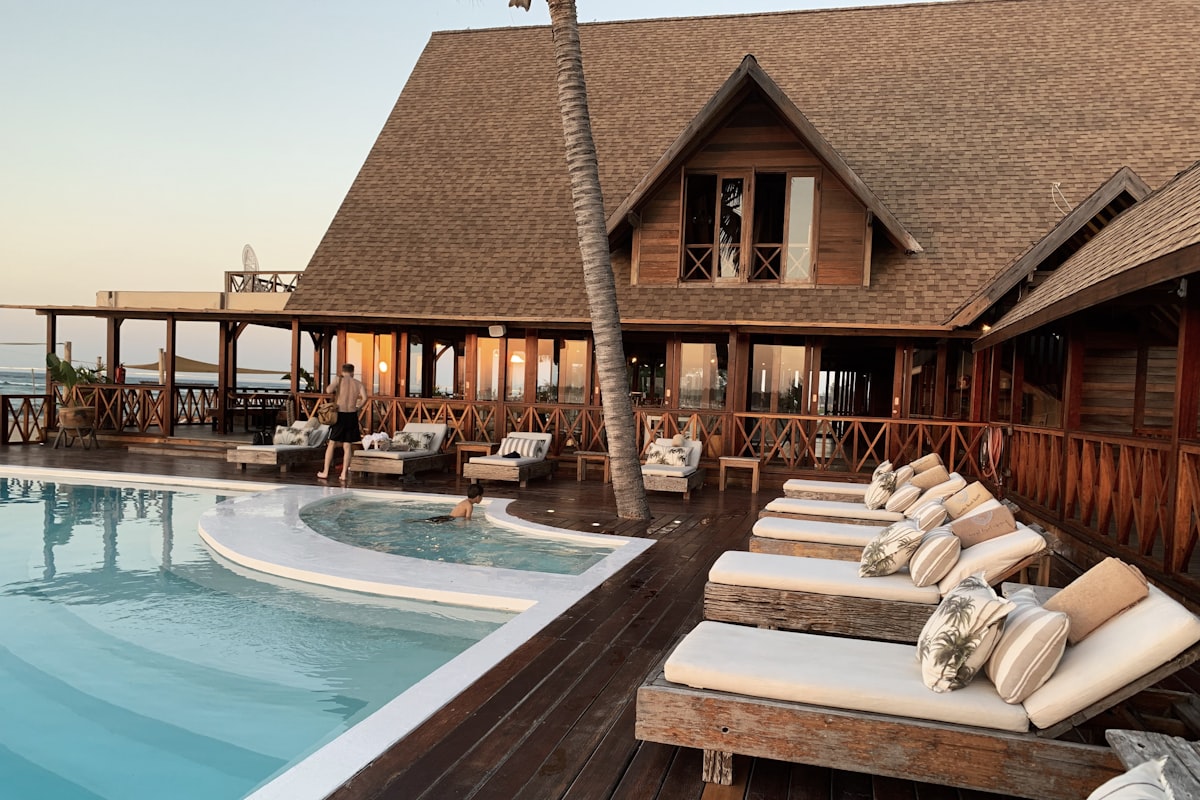
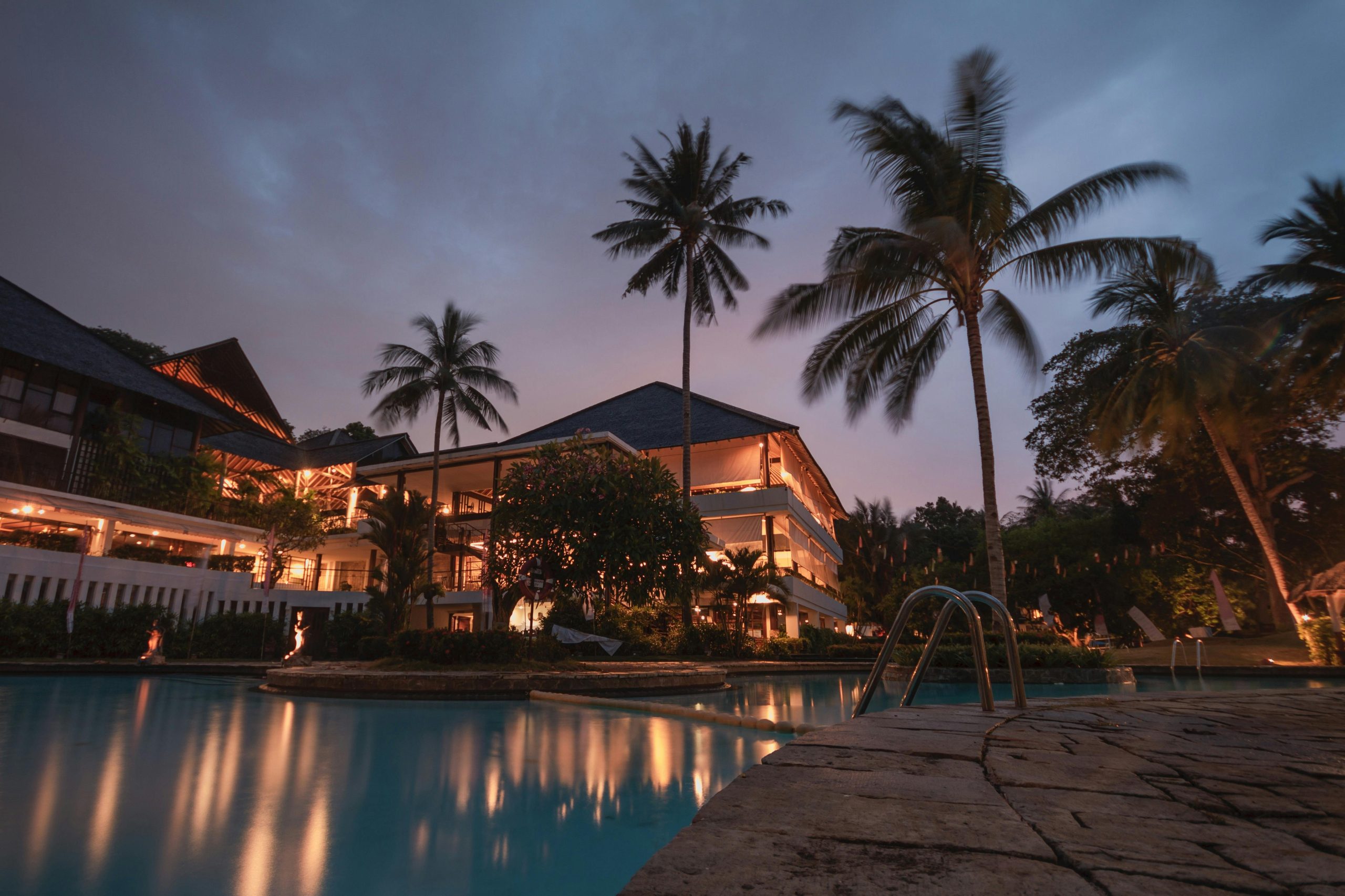
Extensive Resort Facilities: Resorts roll out the red carpet: multiple restaurants helmed by chefs you’ve seen on Netflix, swim-up bars, lagoon-sized pools, full-service spas offering hot-stone everything, tennis courts, kids’ clubs with certified supervisors, nightly entertainment, on-site shopping arcades, and sometimes a golf course or private slice of beach thrown in for good measure.
Comparison: Hotels are Swiss Army knives—compact, functional. Resorts are Swiss Army machetes—oversized, brimming with bells and whistles, and occasionally dangerous to your wallet.
Location & Setting: Context is Key
Hotel Locations: You’ll find them next to convention centers, airports, and downtown cores where you can walk to the nearest Starbucks in under four minutes. Convenience is king.
Resort Locations: They plant their flag where postcards are born—beachfront strips in Cancún, cliff tops in Santorini, ski-in/ski-out alpine villages, or secluded islands reachable by seaplane. The journey is part of the allure.
Impact on Experience: Stay at a city hotel and you’ll be mapping museums, subway lines, and restaurant reservations. Check into a resort and you’ll be choosing between paddleboard yoga and the 11 a.m. margarita—tough life.
Guest Experience & Activities: On-Site vs. Off-Site Focus
The Hotel Experience: Your room is mission control for urban exploration. You stash your luggage, charge your phone, and head back out. The hotel’s job is to keep your pillow fluffy and your shower hot for your triumphant return.
The Resort Experience: The property is the attraction. You can snorkel before breakfast, learn to salsa by sunset, and cap the night with fire-dancers—all without swiping your credit card again if you’re on an all-inclusive package.
Activity Comparison: Hotels offer convenience; resorts offer programming. One gives you a key card; the other hands you a schedule of 47 daily activities, plus a coconut with a straw.
Target Audience & Trip Purpose: Who Stays Where?
Hotel Clientele: Road-warrior sales reps, weekend city-breakers, concert-goers, and anyone who views a room as a place to crash, not to commune with nature.
Resort Clientele: Honeymooners who want every whim catered to, families seeking a one-stop kid-entertainment zone, and friend groups whose itinerary reads: “Wake up, decide which pool.”
Suitability Guide: If your goal is to tick off museums or nail that PowerPoint, pick a hotel. If your goal is to forget what day it is while someone hands you a towel the size of a beach blanket, pick a resort.
Pricing Structure & Value Proposition
Hotel Pricing Models: You pay for the room; everything else—Wi-Fi, breakfast, that $7 bottle of water—is à la carte. Great if you plan to eat street tacos and use the city’s free attractions.
Resort Pricing Models: Choose European Plan (room only), Full Board (all meals), or All-Inclusive (meals, drinks, activities, tips). Bundling can feel pricey upfront but saves you from wallet whiplash later.
Cost/Value Analysis: Compare total expected spend, not just nightly rate. A $200 resort that includes three meals, cocktails, and paddleboards can beat a $120 hotel once you add $80 of city restaurant bills and $15 poolside beers.
Key Takeaways & Choosing What’s Right for You
Critical Distinctions:
- Hotels = beds plus basics; Resorts = beds plus built-in vacation.
- Hotels sit where you need to be; Resorts sit where you want to be.
- Hotels charge per piece; Resorts often bundle.
- Hotels facilitate outside exploration; Resorts encourage staying put.
Decision-Making Checklist:
- Travel Purpose: business/culture (hotel) vs. pure leisure (resort).
- Desired Activities: external sightseeing vs. on-site recreation.
- Budget: pay-as-you-go vs. upfront bundle.
- Group/Family Needs: babysitting, kids’ clubs, teen programs favor resorts.
- Length of Stay: one or two nights (hotel) vs. multi-night unwind (resort).
Frequently Asked Questions (FAQ)
Q1: Can a hotel be called a resort?
Absolutely—marketing departments love fuzzy language. If the “resort” is on a city block without a pool the size of a tennis court, treat the label with suspicion.
Q2: Is a resort always more expensive than a hotel?
Sticker shock says yes, but run the numbers. An all-inclusive can undercut a hotel plus daily restaurant tabs, especially in pricey destinations.
Q3: Which is better for families, a hotel or a resort?
Resorts usually win thanks to supervised kids’ clubs, shallow splash areas, and buffets where picky eaters can assemble a meal that isn’t just fries.
Q4: Are all resorts “all-inclusive”?
Nope. Some offer only rooms (European Plan), while others let you add meal plans. Read the fine print before you fantasize about bottomless mojitos.
Q5: Can I find resorts in big cities?
Yes—urban resorts exist (think Vegas or Orlando), but they’re essentially vacation fortresses amid the skyline. Expect resort amenities plus easy access to city thrills.
References & Further Reading
For deeper industry definitions, check the American Hotel & Lodging Association. Compare real-world guest photos and reviews on TripAdvisor before you commit. And if you’re still torn, remember: the best choice is the one that matches your itinerary, your budget, and your desire (or lack thereof) to change out of pajamas before noon. Safe travels!