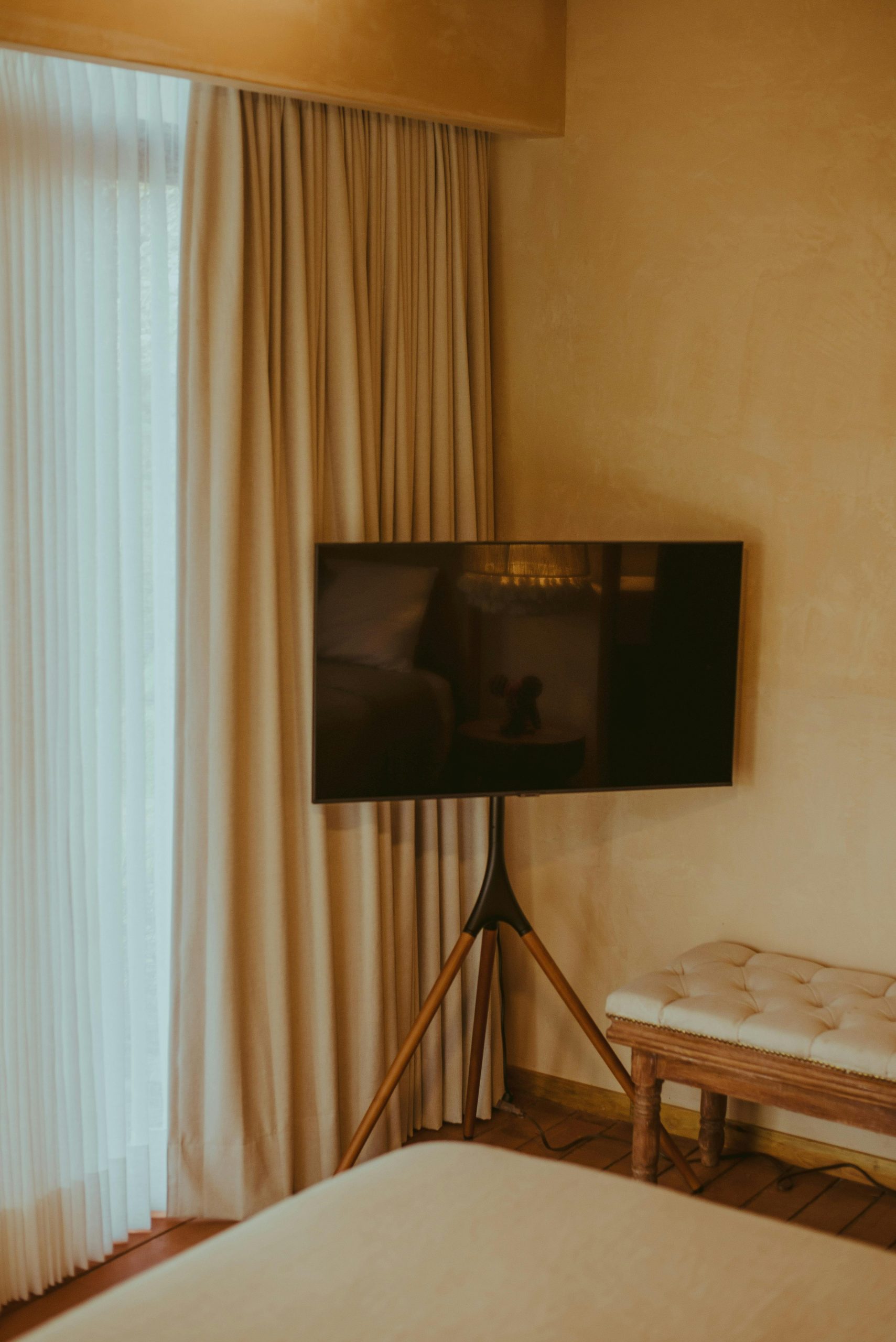
Picture this: your guest has just flown eight hours, survived the airport Uber gauntlet, and finally collapsed onto the hotel bed. They open Netflix on their phone, ready to finish the last season of Stranger Things, only to realize the in-room TV still thinks “streaming” is a 2014 pay-per-view channel. Cue the one-star review that starts with “It’s 2025—why do I need an HDMI cable?”
Top TV casting solutions for hotels: enhance guest experience, save your online reputation, and—surprise—actually make money while you’re at it. In the next ten minutes you’ll learn why consumer-grade dongles melt down on hotel Wi-Fi, how to compare enterprise-grade vendors without drowning in acronyms, and what concrete ROI looks like when guests hit “cast” instead of “complain.”
Understanding Hotel-Specific Casting Needs & Challenges
Let’s start with the obvious: a $35 Chromecast from Best Buy is a rock-star in your living room and a train-wreck in room 412. Why? First, it assumes one happy family on a single, password-protected network. Hotels run hundreds of VLANs, captive portals, and enough firewalls to make the Pentagon blush. Consumer sticks can’t isolate traffic, so Mr. Smith’s laptop in 412 suddenly discovers Mrs. Jones streaming Bridgerton next door—awkward, and a GDPR-sized lawsuit waiting to happen.
Hotel-grade casting must tick three boxes: bullet-proof security (network isolation, device authentication), zero-touch ease (no app downloads, no 800-number tech support), and fleet management (remote reboots, analytics, content filtering). Miss one and your TripAdvisor score drops faster than the elevator at check-out.
Still think “it’s just TV”? Cornell’s Center for Hospitality Research found that in-room tech glitches drop guest-satisfaction scores by 18 percent overall—even when the bed, shower, and breakfast were flawless. Translation: a $200 RevPAR room just lost $36 in perceived value because the guest couldn’t cast Peppa Pig for their toddler.
Types of TV Casting Solutions Available for Hotels
Protocols are basically the languages devices speak. Google Cast is the lingua franca for Android and Chrome, AirPlay 2 is Apple’s VIP club, Miracast is Windows’ attempt at relevance, and some vendors still speak their own dialect. The best hotel platforms are multilingual—they’ll accept an iPhone, a Surface, or that weird cousin’s Pixel without prejudice.
Hardware vs. software? Hardware means a puck or set-back box physically bolted behind the TV—great for retrofitting 300 legacy sets. Software lives inside a smart TV’s chipset or the hotel’s IPTV head-end—cleaner install, but you’ll need 2021-or-newer sets and a willingness to update firmware like it’s Pokémon GO.
Standalone devices are the Airbnb of casting: quick, cheap, no strings attached. Integrated solutions marry the property-management system (PMS) so the TV automatically greets “Welcome back, Ms. Patel” and clears her session at 11:59 a.m. checkout. Choose standalone if you’re a boutique inn with 40 keys; go integrated when you’ve got 500 rooms and a loyalty program to feed.
Key Features & Capabilities of Leading Solutions
Guest-side, the holy trinity is: one-tap connection, 1080p/4K without stutter, and compatibility back to iOS 12 (because Grandpa’s iPad mini isn’t retiring anytime soon). Bonus points if the welcome screen auto-translates into Spanish, French, or emoji.
Management-side, you want a cloud dashboard that shows which rooms are streaming, how long, and what bandwidth they’re inhaling—think Google Analytics for binge-watching. Content filtering keeps adult material off the 55-inch public display in the junior suite; branding lets you slap your logo and upsell spa vouchers between episodes.
Under the hood, insist on WPA2-Enterprise, TLS 1.3, and certificate-based pairing. The solution should also play nice with existing coax, IPTV, or satellite feeds—because the Super Bowl still needs good old live TV even if everything else is on Hulu.
Comparison of Top Providers & Products
Sonifi: The 800-pound gorilla. Their STAYCAST supports Google Cast + AirPlay 2, integrates with Opera PMS, and offers 24/7 NOC. Strength: rock-solid support; weakness: premium pricing that starts around $9/room/month plus hardware.
Enseo: Employee-owned, Texas-tough. Their set-back box doubles as an IoT hub for door locks and thermostats. Strength: future-proof; weakness: installation is truck-roll only, so budget for on-site techs.
Volara: Voice-first, AirPlay-heavy. If you already deployed Alexa for Hospitality, Volara slips in like peanut butter and jelly. Strength: voice commands (“Alexa, cast CNN”); weakness: Android guests feel like second-class citizens.
ScreenBeam: Born from Actiontec, enterprise Miracast pioneer. Strength: works without Internet (local Wi-Fi Direct) so Netflix still streams when the ISP ghosts you; weakness: Apple users need an extra app—deal-breaker for some.
Inview: European darling with app-free casting via QR code. Strength: GDPR compliance baked in; weakness: smaller U.S. support footprint.
Pricing shorthand: hardware leases run $5–$9 per room per month; software-only can dip to $2–$4 but you’ll supply the smart TVs. Most vendors now bundle “casting + IPTV + VoD” into one subscription to stop invoice death-by-a-thousand-cuts.
Implementation Considerations & Best Practices
Step 1: audit. Walk 10 random rooms with a phone and speed-test app—if you can’t pull 25 Mbps down, fix the Wi-Fi before you hang $200 boxes. Step 2: VLAN gymnastics. Create a dedicated SSID that isolates guest devices from the POS system but still allows Internet; your PCI compliance auditor will thank you. Step 3: pilot. Roll out 20 rooms, train two front-desk agents, and collect guest feedback for 30 days. You’ll discover quirks—like how some Android phones default to 2.4 GHz and choke—before the full fleet ships.
Training is underrated. A 30-minute micro-learning module for housekeepers (“don’t unplug the puck when dusting”) and a laminated one-pager at reception (“Guest can’t connect? Ask them to disable VPN.”) prevent 80 percent of help-desk tickets.
Signage: keep it dumb-simple. A tent card that reads “1. Connect to ‘HotelGuest’ Wi-Fi 2. Tap the Cast icon 3. Choose room 412. Done.” No QR, no tiny print, no Shakespeare.
Impact on Guest Experience & ROI
Hard numbers: STR pegs post-stay NPS 11 points higher at limited-service hotels that deployed casting versus sister properties that didn’t. Eleven points can shift a property from 78th to 92nd percentile in its comp set—enough to command a $6 ADR premium, or roughly $21,900 per year on a 100-room hotel.
Case study: The Hoxton, Portland installed Sonifi’s STAYCAST across 119 rooms. Within six months, repeat bookings from Gen-Z and Millennial guests rose 14 percent, and in-room dining revenue climbed 9 percent—because guests were actually in the room, not at the bar down the street hunting for Wi-Fi.
ROI math: assume $8/room/month all-in, 100 rooms, $96,000 over 10 years. Add $30,000 upfront for Wi-Fi upgrades. Counterbalance with $6 ADR lift at 70 percent occupancy = $153,300 extra revenue over the same decade. Net gain: about $50K plus the intangible halo of 4.7-star reviews that juice OTA ranking.
Security, Privacy & Compliance
Guests fear two things: their kids stumbling onto adult content and their banking app leaking to the guy next door. Enterprise-grade casting uses per-session encryption keys that evaporate at checkout—like Snapchat for your TV. MAC-address randomization prevents the laptop in 511 from seeing the TV in 512, even if both are on the same VLAN.
Regulations: CCPA and GDPR treat device IDs as personal data. Vendors must provide data-processing agreements that spell out retention (usually 24 hours) and deletion. Ask for SOC 2 Type II reports; if they hand you a blurry PDF, run.
Content filtering should auto-block URLs flagged by the National Center for Missing & Exploited Children and support custom blacklists for, say, rival casino ads. Because nothing ruins a luxury vibe like hard-core pop-ups during a corporate retreat.
Future Trends & Innovations in Hotel Casting
Voice is the next remote. Picture “Hey Google, cast my workout playlist and set the room lights to magenta.” Early pilots at MGM properties show 34 percent of guests use voice commands at least once per stay—mostly to cast Spotify and ask checkout time.
AI-driven recommendations are coming: the TV notices you binged two episodes of Chef’s Table and quietly suggests the in-house sushi masterclass. Opt-in only, of course—nobody wants HAL 9000 selling them ramen at 2 a.m.
Standards will keep splintering, but Matter (the new IoT unifier backed by Apple, Google, Amazon) promises one day to let guests cast without even selecting a room number. Until then, pick vendors who over-the-air update their firmware like Tesla, not like a 1998 Ford.
Conclusion
Top TV casting solutions for hotels: enhance guest experience, boost RevPAR, and future-proof your tech stack in one swing. The right choice marries iron-clad security with dead-simple UX, plays well with your PMS, and costs less than a bag of artisanal donuts per room per month.
So audit your Wi-Fi, shortlist two vendors, and demand a 20-room pilot. Your guests will reward you with five-star raves, and your accountant will finally stop side-eyeing the “technology” line item. Ready to cast away your competition? Start streaming—successfully.
Frequently Asked Questions (FAQ)
What is the most important feature to look for in a hotel casting solution?
Network isolation and automatic session wipe at checkout—because data-privacy lawsuits are pricier than movie tickets.
Can guests use these solutions without downloading a separate app?
Yes. Leading platforms use native Cast or AirPlay menus already baked into Netflix, YouTube, Disney+, etc.
How do we prevent guests from casting inappropriate content to the TV?
Enable content filtering on the dashboard and disable screen-mirroring by default; only allow certified streaming apps.
Is our existing hotel Wi-Fi network sufficient for casting?
If each room can pull 25 Mbps down and 5 Mbps up on 5 GHz, you’re golden. Otherwise upgrade access points first.
What is the typical cost range for implementing a casting solution?
$2–$9 per room per month depending on hardware, support level, and contract length.
How long does a typical installation and setup process take?
Pilot: 1–2 weeks. Full 200-room rollout: 4–6 weeks including network tuning and staff training.
References & Further Reading
Hospitality Technology Magazine for annual in-room entertainment benchmark reports.
HTNG (Hotel Technology Next Generation) workgroups on casting security standards.
STR Analytics case study library on guest satisfaction and tech ROI.