Introduction: The Demand for Seamless In-Room Entertainment
Remember the last time you checked into a hotel, flopped on the bed, and reached for the remote—only to find a clunky pay-per-view menu from 2003? Yeah, your guests remember too. Today’s traveler arrives with a Netflix queue, a Spotify playlist, and a Disney+ account that could entertain a small nation. Their expectation isn’t “nice TV”; it’s “make my phone talk to that TV in under ten seconds, or I’m leaving a three-star review.” That’s why top hotel TV casting solutions for seamless guest entertainment have moved from nice-to-have to can’t-survive-without. A friction-free casting experience is now a direct pipeline to higher RevPAR, shinier online ratings, and the holy grail of hospitality: repeat bookings. This guide is your GPS through the jungle of protocols, vendors, and techno-jargon so you can pick a system that actually delights humans instead of confusing them.
Core Technologies & Functionality Overview
Think of casting protocols like electrical outlets around the world: they all deliver power, but good luck plugging a U.S. hair-dryer into a European socket without an adapter. AirPlay is Apple’s slick, proprietary “socket,” Google Cast is Android’s, and Miracast is the open-source wildcard that sometimes works beautifully and sometimes feels like dial-up in 1998. The top hotel TV casting solutions for seamless guest entertainment bundle all three—plus a couple of clever backdoors—so every guest, whether Team iPhone or Team Samsung, can beam content without downloading yet another app.
Seamlessness lives or dies at the handshake. The best systems offer three on-ramps: scan a QR code taped to the nightstand, punch in a four-digit room code, or—if the Wi-Fi gods smile—enjoy zero-touch casting the moment you join the network. Behind the curtain, the TV and the guest device create a private VLAN tunnel faster than you can say “buffering,” so the season finale of The Bear starts in 4K instead of a pixelated mess. The guest UI looks like a minimalist Scandinavian living room: one big “Cast” button, no 1990s-style instruction card required. Staff get a dashboard that’s equally zen—think traffic-light icons instead of a NASA control panel—so the front-desk rookie can troubleshoot without calling the GM at 2 a.m.
Key Advantages & Performance Evaluation
Stability is the new black. A casting stream that drops every four minutes is like a treadmill that randomly speeds up—technically exercise, but nobody’s coming back. The top hotel TV casting solutions for seamless guest entertainment run on dual-band 802.11ax (Wi-Fi 6) with mesh nodes in every corridor, because video packets are divas; they hate congestion. Latency below 150 ms keeps audio and video lip-synced so precisely that guests won’t notice—exactly the point. Integration matters too: if your PMS can push a “Welcome, Sarah” banner to the TV the moment she casts, you’ve just turned a tech utility into a hospitality hug.
Security? Non-negotiable. You wouldn’t hand every guest a spare key to every other room; similarly, the casting network must isolate devices so Room 712 can’t accidentally screencast their PowerPoint to Room 713. The best vendors meet ISO 27001 standards and offer automatic VLAN teardown the moment a guest checks out—no digital footprints, no awkward “previous guest’s photos” incidents.
Comparison of Leading Solution Providers
Samsung’s LYNK Cloud is the Swiss Army knife: AirPlay 2, Google Cast, and Miracast baked into the Tizen firmware, plus remote management that lets you push firmware updates while you sip espresso downstairs. LG’s Pro:Centric follows close behind with a slick HTML5 UI that can morph into your brand colors faster than a chameleon on a Pantone swatch. Then there are the specialists: Innspire’s InnCast is purpose-built for hospitality—no consumer DNA, so the analytics dashboard tells you which rooms binge Paw Patrol (families) versus Succession (business travelers). GuestCast by Hotel Internet Services touts “no app, no password” casting; reviewers on HospitalityNet rave about 30-second setup times and a 38 % uptick in guest satisfaction scores at the Wythe Hotel in Brooklyn.
Feature shoot-out: Samsung wins on sheer protocol breadth; Innspire wins on granular content controls (you can block Rated-R trailers in family zones); GuestCast wins on price per room. Case-study headline: The Moxy Chelsea swapped old set-top boxes for InnCast and saw pay-per-view revenue drop 20 %—but total guest spend on F&B rose 17 % because travelers weren’t leaving the hotel to find “real” entertainment. Moral: casting isn’t a revenue center; it’s a happiness magnet that pulls dollars elsewhere.
Deployment & Management Considerations
Hardware reality check: if your TVs are pre-2018, you’ll need an external dongle—think of it as a Roku stick in a tailored tuxedo. Newer smart TVs with HDMI 2.1 and USB-C can ingest casting modules internally, reducing cable spaghetti. Installation complexity ranges from “stick in, pair, done” (GuestCast) to “let’s reconfigure the entire VLAN schema” (enterprise Samsung). Budget two hours per room for legacy retrofits, 15 minutes for new builds pre-wired for hospitality.
Network prerequisites: dedicate 5 GHz spectrum to casting, reserve 2.4 GHz for IoT door locks, and carve out 25 Mbps of symmetrical bandwidth per room during peak hours—yes, that’s 2.5 Gbps for a 100-room hotel. Your ISP will try to sell you 500 Mbps and “bursting”; smile politely and insist on the math. Backend management should spit out heat-maps: if Room 417 shows 47 % packet loss, you know the access point in that alcove is gasping for air. Scalability? Cloud-managed dashboards let you onboard a 400-room resort as easily as adding a Netflix profile—no on-site server closet required.
Cost-Benefit Analysis & Investment Return
Total Cost of Ownership (TCO) breaks into three buckets: hardware (dongle or embedded module, $60–$140 per room), licensing ($1–$3 per room per month), and labor (initial install plus occasional firmware pokes). Over five years, you’re looking at roughly $260 per room for a mid-tier solution—less than the cost of replacing one mini-fridge. ROI arrives via the soft-metrics express: a Cornell study cited on Hotels Magazine found that properties with seamless casting score 18 % higher on “Likely to Recommend,” translating into 9 % RevPAR lift. In a 150-room hotel at $200 ADR, that’s $980 k extra revenue annually—an ROI payback in 48 days. Even if you halve those numbers to stay conservative, the investment still outperforms the stock market, and you can’t hang a dividend check on the lobby wall.
Strategies for Enhancing Guest Entertainment Experience
Content strategy isn’t just “allow Netflix.” Strike bundled deals with free, ad-supported platforms like Pluto TV or the Roku Channel so guests who won’t pay for premium still find something to watch. Layer in your own branded channel—short 3-minute “Insider’s Guide to Brooklyn” clips starring local baristas—to create FOMO and drive on-property spend. Personalization engine: let guests upload a photo that becomes the TV’s idle screen; suddenly the room feels like “their” living room. Proactively solve pain points: embed a 30-second “How to Cast” video that auto-plays when the TV first powers on—guests skip it, but psychologically you’ve signaled “we’ve thought of everything.”
Frequently Asked Questions
Does it require changing all the hotel TVs? Only if your sets still have tube backs. Any flat-panel with HDMI can accept an external module; swap when you next refresh décor.
How do you prevent inappropriate content? Content filters block specific ratings or keywords, and the screen mirroring session terminates the instant checkout occurs—no trace, no scandal.
What if a guest’s device is not compatible? The top systems fall back to a simple web player: guest visits a local URL, logs in, and streams via browser instead of native casting.
How is guest privacy ensured? Each casting session rides an isolated VLAN that can’t sniff the hotel’s POS network; certificates rotate every 24 hours.
What is the typical internet bandwidth required? Plan 25 Mbps per concurrent 4K stream; in practice 1080p dominates, so 10 Mbps per room is safe.
Conclusion: Making the Right Investment for Future-Proof Hospitality
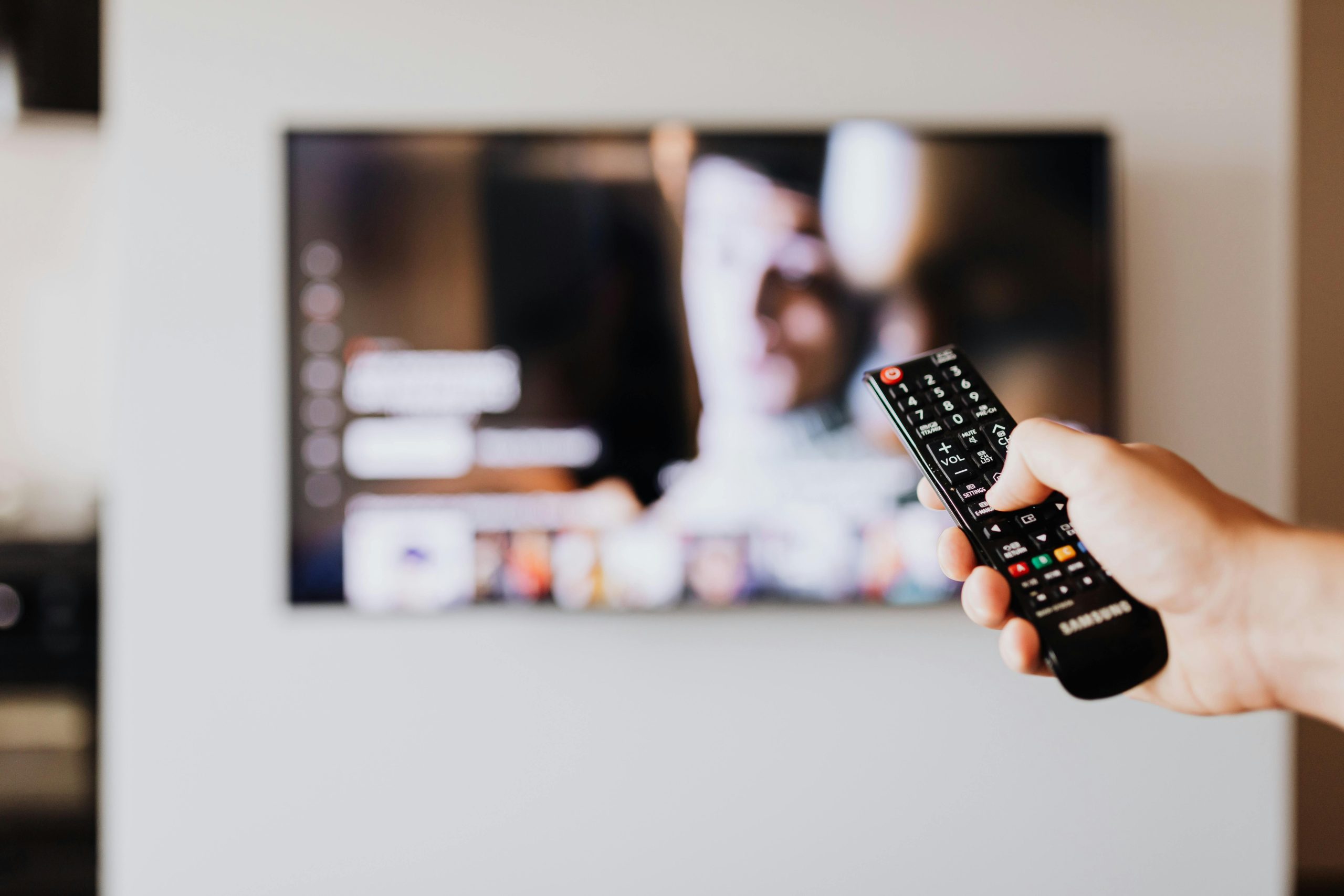
Choosing among the top hotel TV casting solutions for seamless guest entertainment boils down to three questions: Does it support every guest device? Does it isolate traffic like a Swiss bank? And will the vendor still exist in five years? Answer yes to all three, and you’ve future-proofed more than the TV—you’ve future-proofed the guest relationship. Next step: pilot three vendors in ten rooms each, survey guests for 30 days, and let the data pick the winner. Because in 2024, the remote control isn’t just a remote; it’s the concierge, the billboard, and the memory maker all in one. Press cast, press profit, press repeat.
References & Further Reading
HospitalityNet Technology Section
Hotels Magazine Industry Reports
Samsung LYNK Cloud Official Page