The Allure of Hotel-Sheet Freshness
Remember the last time you flopped onto a hotel bed and thought, “Why does this sheet smell like a cloud and feel like it was kissed by angels?” You’re not alone—Google searches for “how to make my sheets smell like a hotel” have spiked 120 % since 2020, according to Google Trends. That crave-worthy scent and crisp hand-feel aren’t magic; they’re the predictable outcome of industrial-strength chemistry, Olympic-level washing machines, and a few tricks you can absolutely copy-paste into your own laundry room. This guide unpacks the best detergents hotels use for fresh and clean sheets—and the surprisingly simple science behind slipping into that five-star freshness every single night.
Why Hotels Achieve Superior Freshness & Cleanliness
Hotels don’t just aim for clean; they aim for “nobody ever complains on TripAdvisor.” That means eradicating last night’s mascara, tomorrow’s allergy flare, and the invisible funk of 300 previous guests—then folding it all into a linen origami that says, “Sleep here, you’re safe.” Commercial laundry standards (think CDC laundry hygiene guidelines) demand thermal or chemical disinfection, pH-controlled rinse cycles, and zero residual alkali that could irritate skin. Translation: hotel detergents have to be both Hulk-level strong and dermatologist-level gentle, all while keeping operating costs below roughly 30 cents per pound of linen. No biggie, right?
Key Characteristics of Top Hotel-Grade Detergents
Picture a detergent that’s part Navy SEAL, part yoga instructor. It must:
Annihilate stains: Coffee, blood, fake-tan, Bordeaux—gone in one wash. Many formulas hit a pH of 10–11.5 during the wash break, which is similar to household ammonia but buffered so it won’t eat cotton.
Rinse out like a dream: Low-suds, low-residue surfactants prevent that cardboard-stiff finish. Residue equals greying over time; hotels hate grey like they hate one-star reviews.
De-odorize, then re-odorize: First they nuke the bacteria (hello, oxygen bleach), then they add micro-encapsulated fragrance that bursts when you flop down—think Febreze’s older, buffer brother.
Handle 160 °F (71 °C) water without throwing a tantrum: Hot water accelerates chemical reactions and sanitizes without extra additives.
Keep colors on lockdown: Optical brighteners (the same ones used in paper production) bounce UV light back as visible blue, making whites look like they’ve never met a human armpit.
Be cheaper per use than your streaming subscription: Ultra-concentrated pastes or powders mean pennies per sheet.
Types of Detergents Commonly Used by Hotels
There’s no one-tub-fits-all. Housekeeping managers run a “ladder” approach:
High-alkaline builders: These boost pH so fats saponify (turn to soap) and lift off fibers. Used in the first 3–5 minutes of the cycle, then neutralized with an acid “sour” to protect skin.
Oxygen bleaches (sodium percarbonate or perborate): Think of them as controlled hydrogen peroxide factories—bleach without the swimming-pool whiff.
Enzyme cocktails: Amylase tackles mashed-potato starch; protease eats blood and sweat; lipase obliterates sebum. They work best at 100–120 °F (38–49 °C), so hotels often run a cool enzyme step before cranking the heat.
Specialty boosters: Fabric-safe acids neutralize leftover alkali; fluoropolymers add soil release so the next wash is easier; blue dyes “tone” yellowing the way purple shampoo rescues blonde hair.
Leading Commercial Detergent Brands Favored by Hotels
Meet the big three whispered about in housekeeping break rooms:
Ecolab: Their Fusion line pairs an alkaline detergent with a peroxide bleach; the dispenser auto-adjusts for water hardness. Consumer doppelgänger: Ecolab’s home division sells Peroxy under the OxyPro label on Amazon.
Diversey: Clax Advanced is enzyme-rich and EU Ecolabel-certified. Smaller Airbnb hosts can nab Sun Professional (same parent company) at janitorial supply shops.
Unilever Professional: You know Dove and Axe; hotels know Persil ProClean Concentrated (40 % more enzymes than the supermarket Persil). It’s sold in 5-gallon “bag-in-box” cubes—enough for 500+ loads.
Beyond Detergent: Complementary Hotel Laundry Practices
Even the best detergents are only as good as the plumbing. Hotels soften water to 0–2 grains hardness; calcium and magnesium otherwise bind to surfactants and leave sheets crunchy. They also calibrate washers to “suds lock” (oversuds shutdown) thresholds, so sheets get mechanical agitation that’s roughly the textile equivalent of a deep-tissue massage. Finally, dryers stop at 2–3 % residual moisture; sheets finish air-drying on calender rollers at 300 °F (150 °C) for that glass-smooth finish. Home takeaway: pull sheets out 5 minutes before they’re fully dry, then iron or line-dry the last bit—crispness achieved.
Achieving the “Hotel Feel” at Home
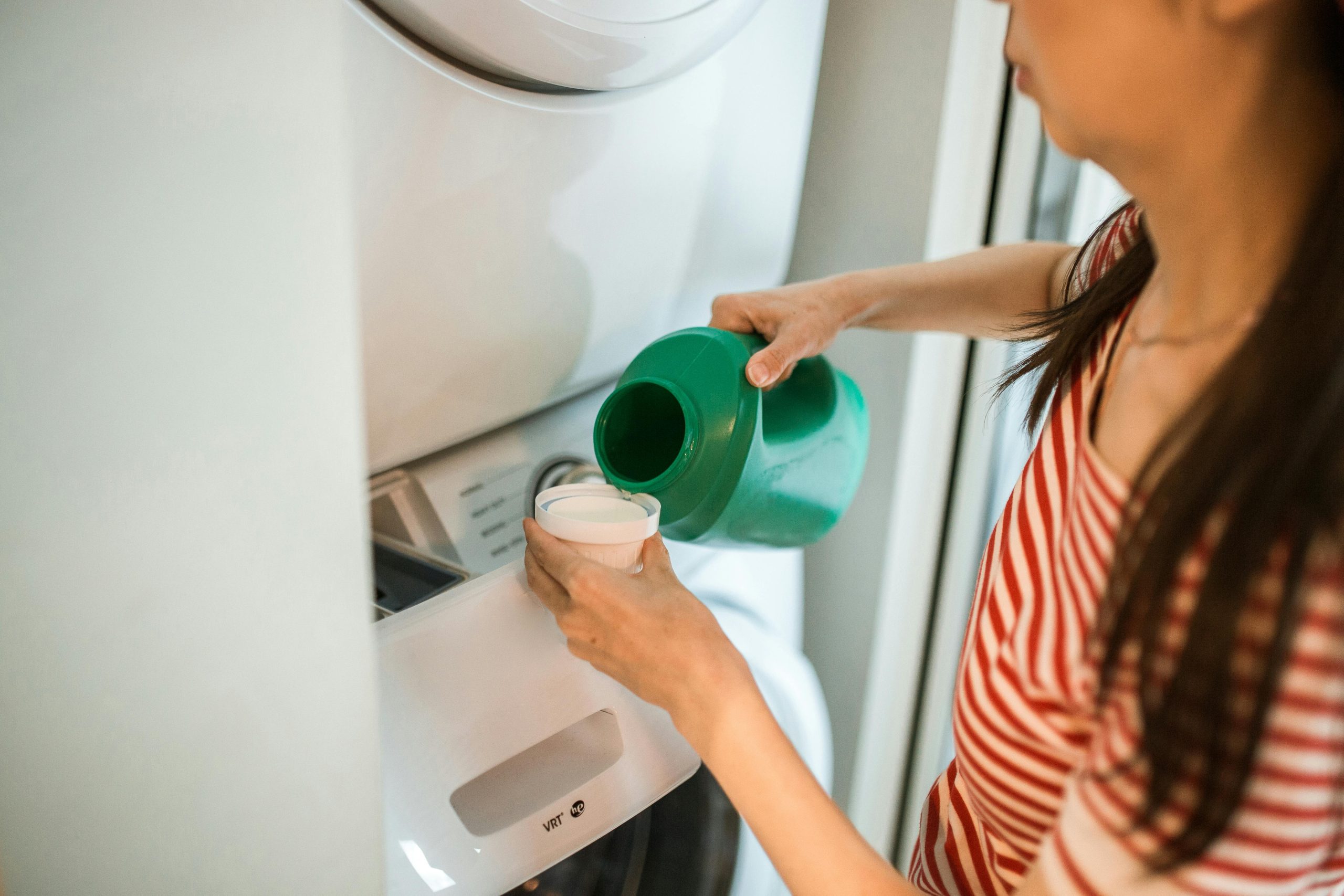
Ready to cosplay a hotel laundry tech? Start with a detergent that hits at least three of the key traits above. Consumer versions like Tide Hygienic Clean or Persil ProClean already pack enzymes + oxygen bleach. Wash in 140 °F (60 °C) if the label allows; the Mayo Clinic confirms this temp knocks out most dust-mite allergens. Use half the recommended detergent—modern machines need less than you think—and add a ½ cup of white vinegar in the rinse to neutralize any leftover alkali. Skip liquid softener; it coats fibers and kills absorbency. Instead, tumble with wool dryer balls and two drops of lavender or citrus essential oil on a scrap cloth; you’ll get scent minus the waxy residue.
Eco-Friendly & Hypoallergenic Options in Hotel Laundry
Sustainability isn’t just a feel-good sticker. In Europe, 42 % of chain hotels now mandate EU Ecolabel or Nordic Swan detergents, according to a 2022 Guardian report. These formulas exclude optical brighteners, phosphates, and micro-plastics, yet still pass ASTM disinfection tests thanks to boosted enzyme activity. Stateside, look for EPA Safer Choice or Green Seal. Bonus: plant-based surfactants rinse cleaner, so sensitive-skin guests stop leaving angry Yelp reviews about rashes.
Where to Source Professional-Grade Detergents
You don’t need a hospitality license—just a willingness to buy by the gallon. Online: WebstaurantStore, CleanItSupply, and even Amazon carry 1-gallon jugs of Diversey and Ecolab. Locally: janitorial supply stores usually sell to walk-ins; ask for “hotel linen wash” and prepare for a 30-second stare of respect. Pro tip: split a case with neighbors—five gallons lasts a family of four about 18 months.
Frequently Asked Questions
Can I use hotel-grade detergents in my home washer? Yes, but dilute: front-loaders need ¼–½ oz per 12-lb load. Overdosing creates excess suds that can fry the pump.
What is the #1 detergent used by hotels? Ecolab’s Fusion system dominates U.S. mid-scale to luxury chains; Diversey leads Europe.
How do hotels keep sheets so white without damage? Multi-step chemistry: high pH lift, oxygen bleach, then acid sour. No chlorine bleach unless someone’s murdered a bottle of red on the bed.
Do hotels use fabric softener? Rarely. Softeners reduce absorbency and can yellow whites. They rely on low-residue formulas and mechanical calendering for smoothness.
Are these powerful detergents safe for sensitive skin? If properly rinsed and neutralized, yes. Look for EU Ecolabel or EPA Safer Choice variants for extra peace of mind.
How can I get the hotel smell without commercial products? Wash with an enzyme detergent, line-dry in sunlight (UV = natural bleach + fresh air scent), then tumble 5 minutes with a damp microfiber and two drops of lemon or neroli oil.
Conclusion: The Formula for Lasting Freshness
Hotel-sheet nirvana boils down to three things: the right chemistry (enzymes + oxygen bleach + neutralizing sour), the right physics (140–160 °F water + proper rinse), and the right finishing move (dryer timing or calender pressing). You don’t need a tunnel washer the size of a city bus—just a willingness to treat your laundry like a lab experiment with cuddly results. Pick a detergent that ticks the boxes above, tweak your routine, and prepare for partner-approved, guest-impressing, self-spoiling sheet bliss. Because at the end of a long day, everyone deserves to fall into a bed that feels like it’s waiting for a five-star review.
References & Further Reading
CDC Laundry Hygiene Guidelines
Mayo Clinic – Safe Laundry Practices
The Guardian – Hotels & Sustainable Laundry
Google Trends – Hotel Freshness Searches