Picture this: it’s 6:30 a.m., the breakfast buffet is still half-asleep, and you’ve been asked to transform a sea of 300 stacking chairs from last night’s gala into a U-shape for a 9 a.m. corporate pow-wow. The clock is ticking, guests are yawning over croissants, and one rogue chair leg is plotting a scratch across a $20,000 marble floor. Welcome to the hidden Olympics of hotel life—where how to move stacking chairs efficiently in hotels isn’t just a nice-to-have skill, it’s the difference between a seamless day and a viral TripAdvisor rant.
Unlike hauling boxes in a warehouse, chairs are oddly shaped, top-heavy when stacked, and—let’s be honest—have a personal vendetta against door frames. Add plush carpets, sleepy guests, and the occasional champagne-induced carpet stain, and you’ve got a logistical puzzle worthy of a TED Talk. Efficiency here isn’t corporate buzzword bingo; it’s about saving your back, your sanity, and the hotel’s furniture budget. Move them right and you finish early enough to snag a latte. Move them wrong and you’re the star of a 30-second TikTok titled “When Event Set-Up Goes Wrong.”
Whether you’re the bellhop who can whistle Vivaldi while wheeling 40 chairs, the event coordinator juggling six client changes before coffee, or the facility manager whose nightmares feature scuffed wainscoting, this guide is your backstage pass to a quieter, quicker, and safer set-up. Let’s turn that chair chaos into a choreographed waltz—no guest disturbance required.
II. Preparation & Planning: The Foundation of Efficiency
Ever tried assembling IKEA furniture without checking the instruction count? Yeah, moving chairs blindly feels the same—only heavier. Start with the three big questions: How many? How far? Where to? A quick chair census prevents the awkward “I thought you grabbed the other 50” conversation. Measure door widths and elevator interiors; some modern banquet chairs swell to 19 inches (48 cm) wide—more linebacker than ballerina.
Next, map the stealth route. Service corridors are your secret highways; guest hallways are Times Square on New Year’s Eve. Mark elevator access on a floor plan and tape it to your dolly handle—because no one enjoys U-turns at 7 a.m. while balancing 200 lbs of aluminum. Time your moves like a Netflix release: avoid checkout rushes (8–10 a.m.) and happy-hour spillover (5–7 p.m.). A 2022 CDC report on hotel ergonomics notes that scheduling heavy lifts during low-occupancy windows cuts staff injury claims by 28%—extra motivation to set that alarm.
Finally, channel your inner Marie Kondo: clear the pathway of rogue coat racks, wet-floor signs, and that one suitcase that definitely isn’t sparking joy. A two-minute sweep now saves ten minutes of “oops, sorry ma’am” apologies later.
III. Effective Stacking Techniques for Maximum Stability
Chair Jenga looks fun until a tower leans like Pisa and you’re underneath it. Safe height depends on two things: the chair model’s nesting allowance and the lifter’s wingspan. Most hotel-grade stackers safely nest 8–10 high; anything above shoulder height turns your cervical spine into a question mark. Quick rule: if you can’t see over the stack, neither can the security camera.
Alignment matters. Grip the seat, not the backrest—tilt 15°, feel for the nesting groove, and lower until you hear that satisfying click (the chair equivalent of a French press plunging). Before moving, glance at the legs: many models hide a flip-lock that keeps the stack married tighter than a honeymoon couple. Mixed inventory? Group identical chairs first; mismatched heights create wobble. Think of it as dating—some pairs just don’t stack well.
IV. Using the Right Tools & Equipment
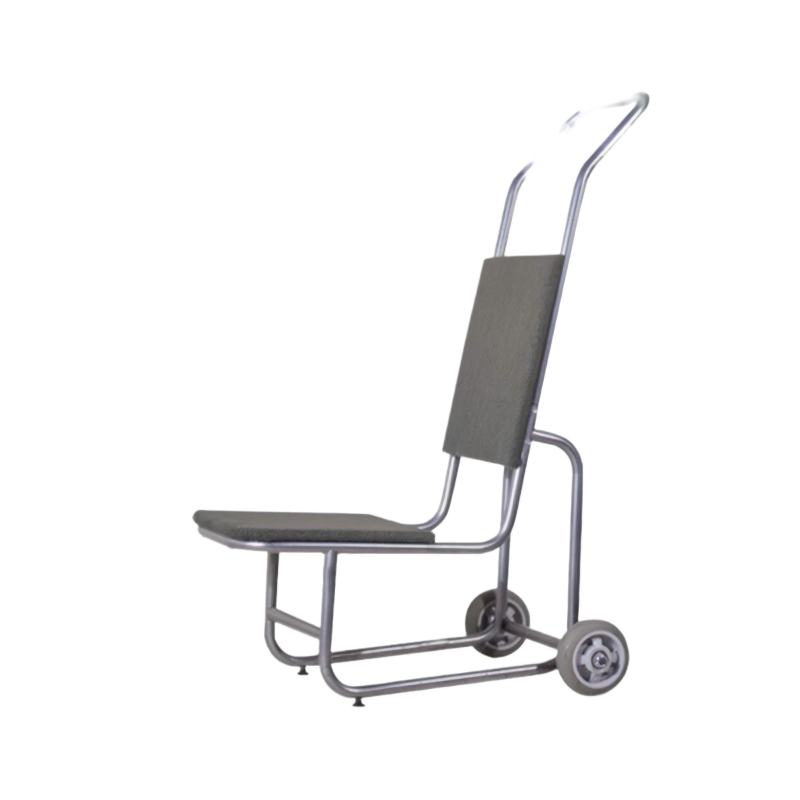
Enter the hero: the stacking-chair dolly. Choose neoprene-caster models rated for at least 300 lb; they glide over carpet like a cat stalking a laser pointer. For hard floors, swap in TPR (thermoplastic rubber) wheels—quieter than a teenager sneaking in after curfew. Pro tip: look for dollies with a wrap-around toe plate; chairs slide on without the awkward “can you lift it a smidge more” dance.
Hand trucks aren’t just for beer kegs. Strap a stack sideways with ratchet tie-downs (the kind truckers use), tilt back, and roll. Flatbed carts shine for long hauls—think underground parking to ballroom B. Lay an old yoga mat underneath to stop micro-vibrations that scuff floors. And yes, gripping gloves (think weight-lifting style) save forearms and projectiles; nobody wants a chair slip that doubles as cardio.
V. Safe Lifting & Maneuvering Practices
Your kindergarten teacher was right: lift with the legs. Keep the stack close—imagine hugging a bulky laundry basket of regrets—and engage your core like you’re about to laugh at a dad joke. For the high towers, tag-team: one person guides the top, the other steers the base. Use simple calls—“Step,” “Door,” “Pivot”—because whispering “sorry” to a guest is better than yelling “WATCH OUT!”
Loaded carts are shopping trolleys on vacation: they drift. Take wide turns, push (don’t pull) through doorways, and pop a wedge under the wheels when pausing on inclines. Elevator etiquette: enter backwards so the load exits forward—no 18-point turns in a 6-ft box. And please, pad the door frame with a towel; repairing mahogany costs more than your annual coffee budget.
VI. Hotel-Specific Considerations for a Seamless Operation
Noise is the enemy of the 5-star review. Swap metal dollies for carpeted banquet versions and add felt dots to any surface that kisses the floor. Move in steady rhythms, not herky-jerky bursts—think smooth jazz, not dubstep drop. Keep conversations to library level; guests remember the staff who whispered “Good morning” far longer than the ones who barked “COMING THROUGH!”
Protect the infrastructure like it’s your own Airbnb rating. Corner guards (foam swimming-pool noodles sliced lengthwise) cost pennies and save thousands. Floor runners—canvas or RamBoard—turn ballroom marble into a temporary freeway. Finally, loop in the front desk: a 30-second radio heads-up (“Moving 200 chairs via east elevator, 6:45 done by 7:00”) prevents awkward guest encounters and earns you silent hero status.
VII. Workflow Optimization for Long-Term Efficiency
Document the magic: draft a one-page SOP with photos (yes, selfies in uniform) showing stack height, dolly type, and route map. Laminate it, zip-tie it to the storage rack—voilà, instant training manual. Pair new hires with veterans for the first week; peer mentoring slashes onboarding time by 40%, according to a 2021 Harvard Business Review study on service industries.
Maintenance isn’t sexy, but neither is a wheel that falls off mid-lobby. Inspect casters weekly, tighten bolts monthly, and retire dollies with bent axles—think of it as rotating tires, only less greasy. Forecast events 48 hours ahead; pre-stage chairs in half-stacks near the room, cutting same-day travel distance by half. Your Fitbit (and your calves) will thank you.
VIII. Essential Safety Precautions
Non-slip shoes are non-negotiable. Brands like Shoes for Crews or Skechers Work line meet OSHA slip-resistance standards and still look sharp with slacks. Over-stacking is the fast lane to sci-fi sound effects—pop, crackle, snap—not the breakfast cereal you want. Cap stacks at eight unless the manufacturer stamp says otherwise; when in doubt, under-promise and over-dolly.
Post “Caution: Chair Move in Progress” signs at corridor intersections—guests distracted by smartphones won’t miss a neon-orange warning. Encourage instant hazard reporting via the hotel’s WhatsApp or Slack channel; a snapped chair leg today prevents a lawsuit tomorrow. Safety isn’t just a poster in the break room—it’s the reason you can clock out and still hit happy hour.
IX. Frequently Asked Questions (FAQ)
Q: What is the safest number of chairs to stack on a dolly?
A: Eight is the sweet spot for most 18-lb banquet chairs—totals ~144 lb, well within common 300-lb dolly limits and keeps the top rail below eye level for the average 5’7″ staffer.
Q: How do we move chairs quietly across carpeted banquet halls?
A: Use dollies with soft rubber wheels, add a layer of quilted moving pad between stack and dolly, and maintain a steady walking pace—no rushing, no rattling.
Q: What should we do if chairs don’t stack or nest properly?
A: Check for bent glide caps or debris in the nesting cups; swap damaged chairs out immediately. A warped chair is a wobbly Jenga block—remove it before the tower tips.
Q: How can we train new staff on these procedures quickly?
A: Shadow-shift method: 15-minute demo, 30-minute supervised practice, followed by a “teach-back” session where the rookie explains the steps. Science calls it the “protégé effect”—teaching cements learning.
Q: What are the best dollies or carts recommended for hotel use?
A: Industry favorites include the Rubbermaid Commercial Stackable Chair Dolly (silent TPR casters) and the Vestil Aluminum Platform Cart (lightweight, 700-lb capacity). Both play nicely with carpet and marble alike.
X. Conclusion: Building a Smarter, Safer Moving Process
Plan like a strategist, stack like a Tetris champ, tool up like a DIY junkie, and move like a ballet dancer—okay, maybe a construction-core ballet dancer. Mastering how to move stacking chairs efficiently in hotels isn’t rocket science; it’s consistency sprinkled with common sense. The payoff? Events flip faster, staff finish shifts without ice packs, and the furniture budget lives to see another renovation cycle.
So laminate that SOP, oil those wheels, and claim your rightful title as the unsung hero of hospitality logistics. Your back, your GM, and that gleaming marble floor will thank you—probably in the form of a 5-star review you’ll never see, but will absolutely deserve.
XI. Additional Resources & References
For deeper dives, skim OSHA’s Materials Handling Guide—it’s the CliffsNotes of safe lifting. Browse Hilton’s Supplier Gateway for approved dolly vendors, or pick up Hotel Operations Management (Pearson, latest edition) for textbook-level event logistics. And if you really want to geek out, watch the EngineerGuy’s YouTube breakdown on caster wheel physics—because yes, rolling can be rocket science if you let it.